Element 1 Cultural Knowledge#
Opinions about language and culture were developed for the learners as one-unit, implicating values, practices, and ways of seeing in languages. Classes cannot be taught as bits of non-related items of vocabulary. The teaching should arise from a true situation where the learner is given an opportunity to explain the purpose and meaning of such a vehicle.
This is evidenced by the support sheet on appropriate behavior and etiquette from L1-E6 to L1-E10. It indeed explains the cultural context under which such an expression as itadakimasu and gochisosama was retained. This explanation implicates giving thanks for such an expression equivalent to no such thing, let alone an authentic one. However, from peer feedback, some students would never realize “deep meaning behind Japanese eating culture,” providing evidence of distributed meanings in culturally responsive pedagogy regarding active teaching and learning about culture as context and practice instead of a bill of facts.
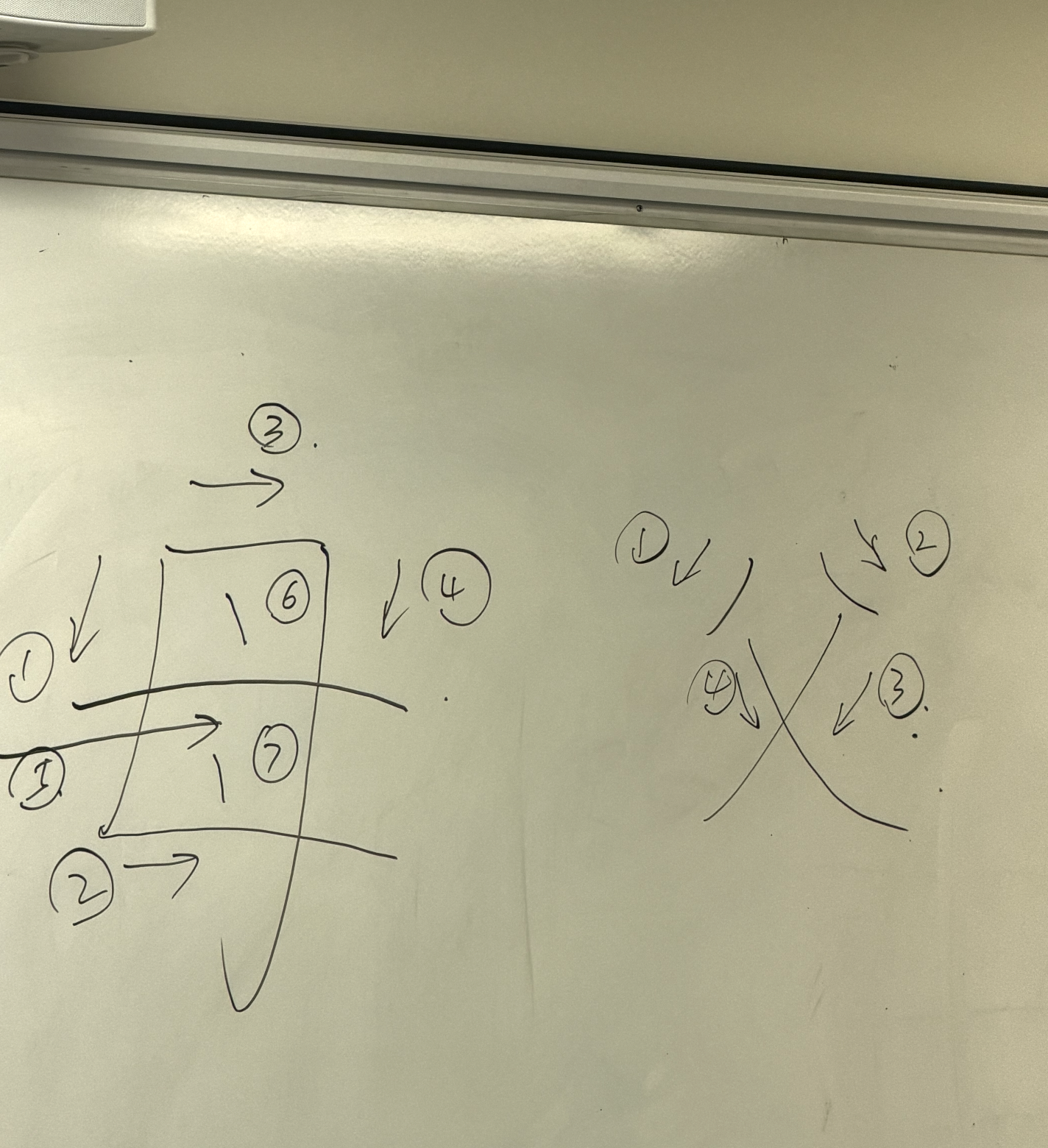
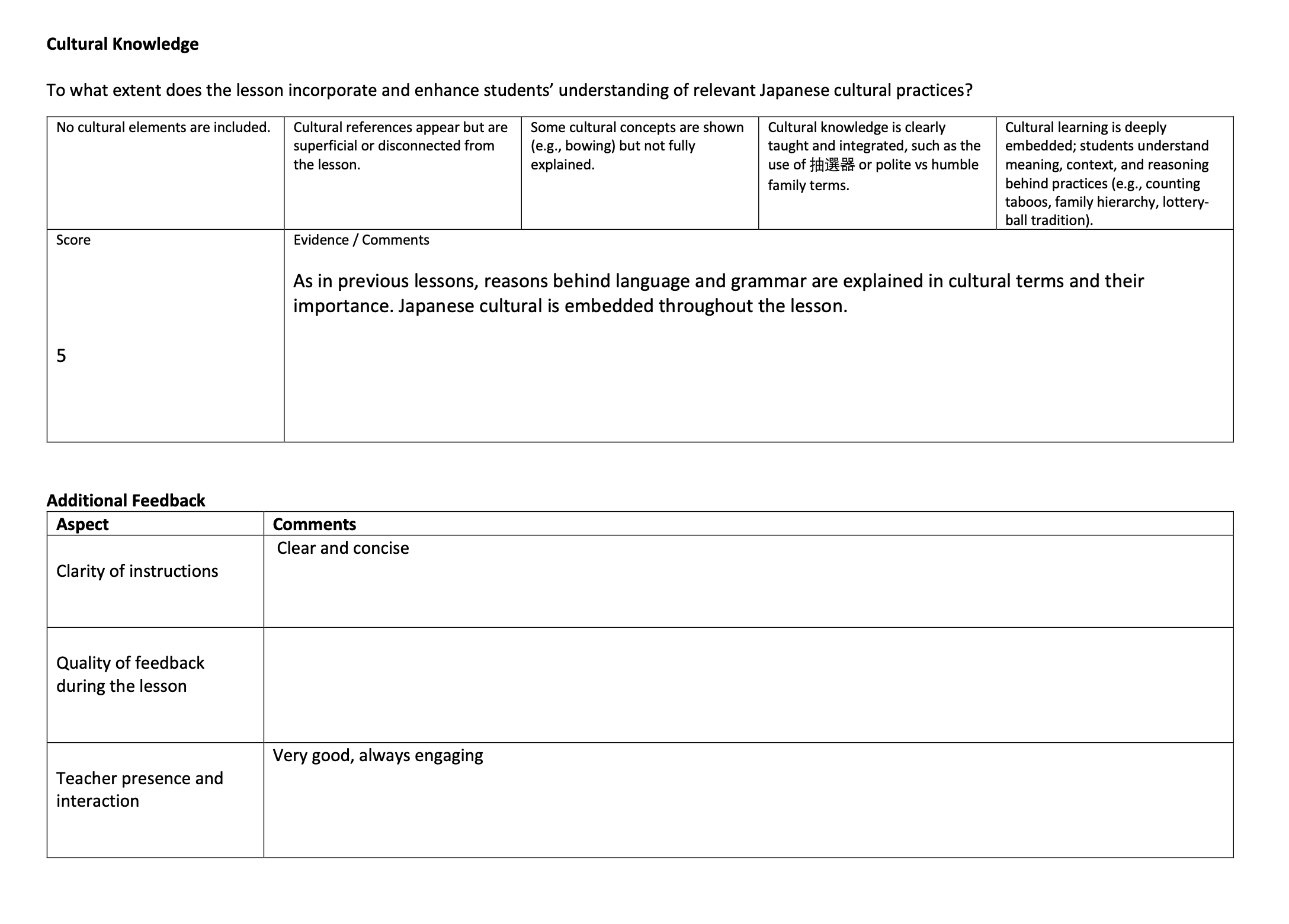
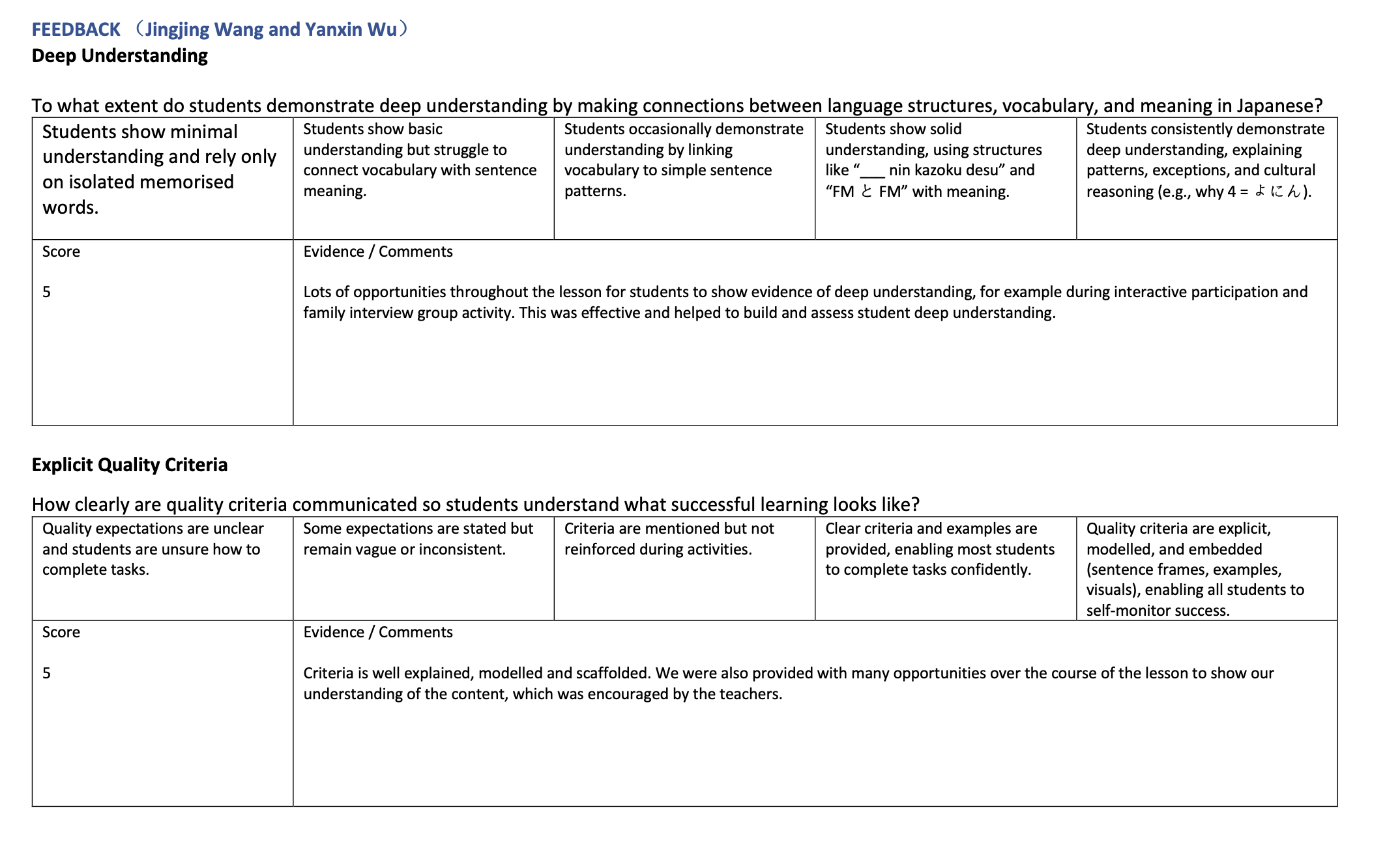
This view was underpinning the kanji demonstration in L3-V1, showing the characters 母 and 父 in the form of ancient writing. Students should not thus start viewing characters as arbitrary signs. Cited as such, these instructors would prove students interested in the culturally embedded writing system on L3-E2 to L3-E4 and hence with appropriate meaning attributed to such a valuable artifact of culture in its name as implied by its shape. Further, this would develop further, implying why things look the way they do. Therefore, the research might be called L4-V1, where Japanese 抽選機 lottery machines randomly divided students into interview groups. Students had to guess what it was used for and why this machine existed in their culture; this was understood instantly, speaking volumes about an element of fairness and belonging to one’s culture. This is well represented in Evidence L4-E1 to L4-E3, where evidence shows students transferring the proper expression to an interview setting.
In this respect, cultural knowledge was related in a roundabout way with the Mystery Box activity in L2-V1, associating family names with proper names. Peer feedback in L2-E2 to L2-E4 pointed out that students feel they have learned something about Japanese culture that one uses polite and humble speech depending on the relationships within a society. Next, it follows that there will be inclusion in culture, further roundabout comparative discussion and practice to find out the differences and similarities between Japanese culture and one’s cultures. In other words, culture is not about having or establishing meaning; therefore, it is not material that should be memorized only.
Element 2 Inclusivity#
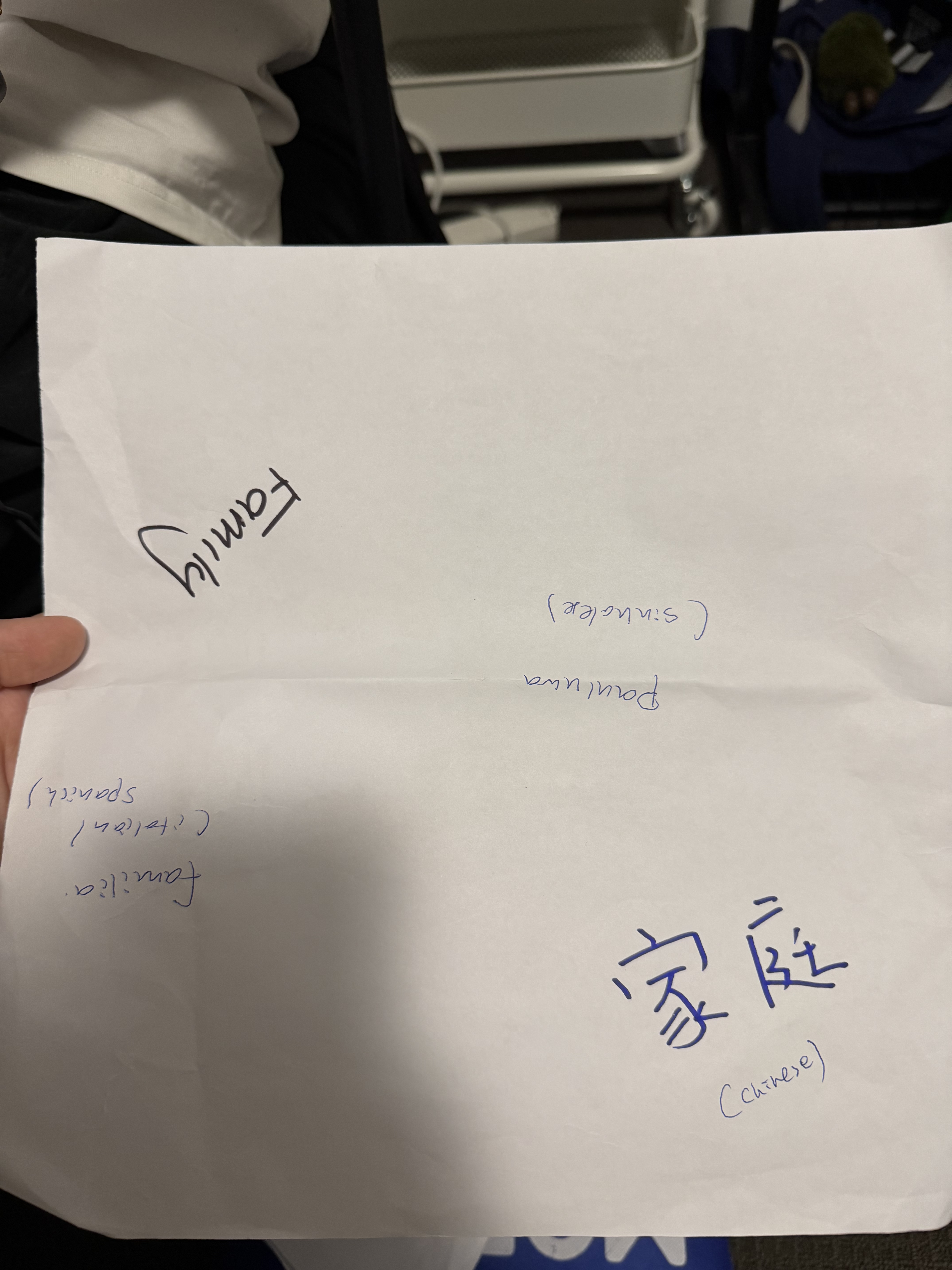
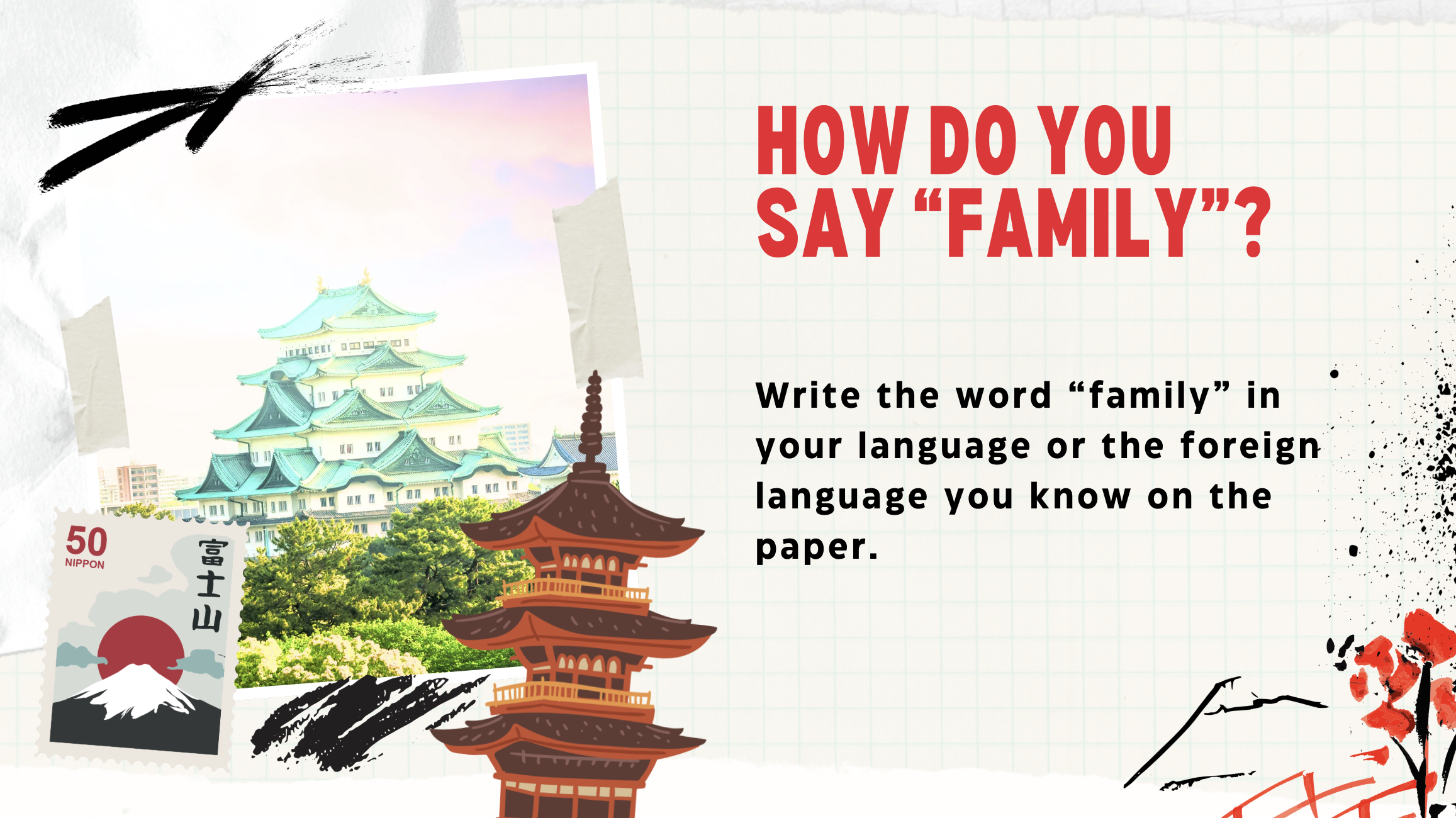
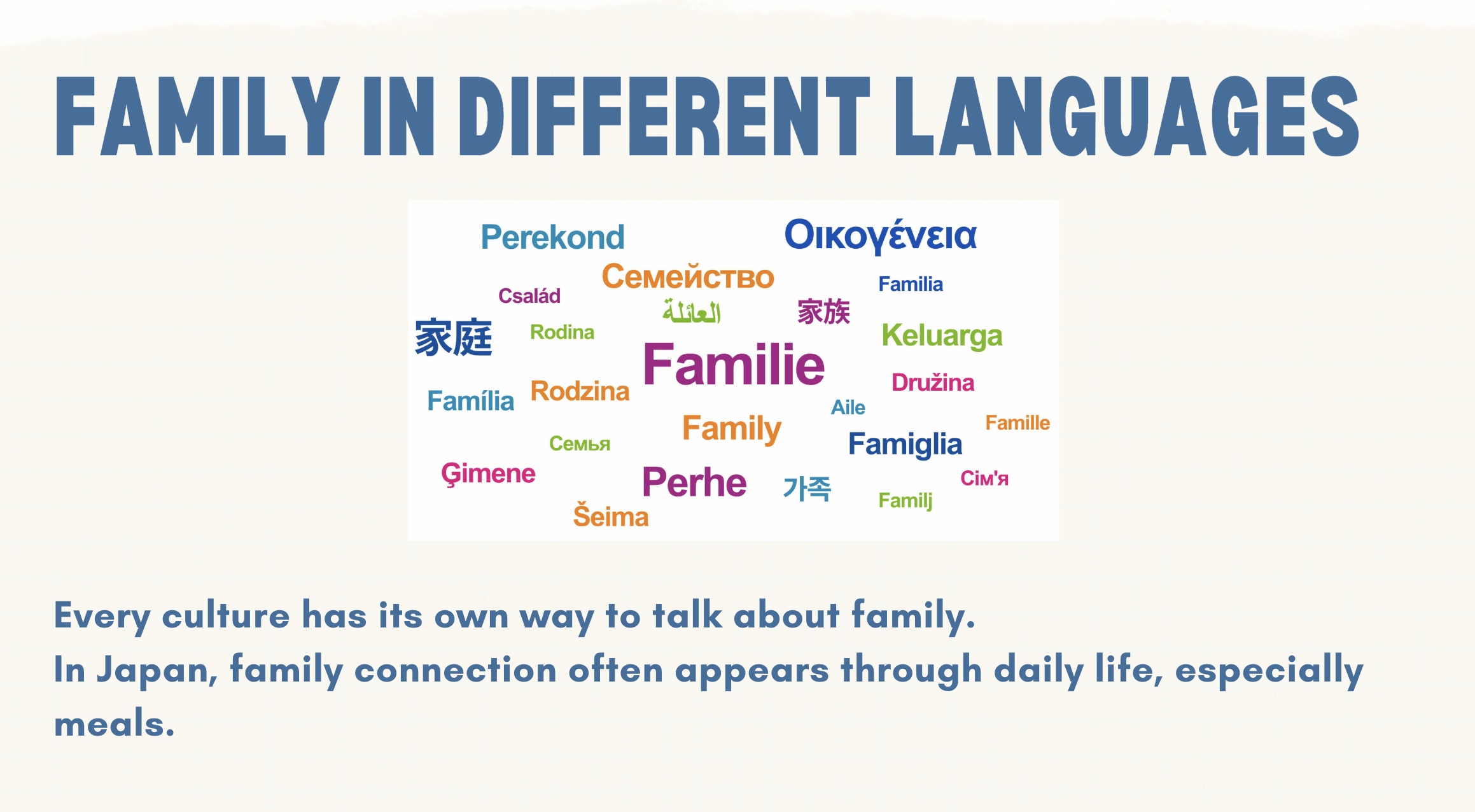
The exploration of the multilingual “family” constructs from L1-E1 to L1-E5 underpins the earliest integrating move in Lesson 1. Thus, to write the word ‘family’ in students’ own languages, the epistemic center of the classroom is further diffused, and all learners become knowledgeable contributors. It is relevant here because the students will likely call on prior knowledge instead of going into the unfamiliar forms in Japanese. There is evidence for pride and curiosity about differences in language; thus, students could use diversity as a resource in the knowledge construction process. This is empirically supported by AITSL (2020) and CRP literature for identity-affirming tasks in which students are more likely to produce better participation rates and academic outcomes.
This support sheet helped students play active games without fear of being embarrassed or blocked by speaking. For instance, students who were shy or who had almost no background in language learning at first tried to make a difference but referred to the program’s scaffolds. In this way, students will have equitable opportunities to engage in the activities. Indeed, such an expectation falls under the general frame of the Universal Design for Learning, according to which affective letdowns do not impede engagement.
Lesson 3 on modelling and task design smoothly passed down to this third level: Introducing the kanji unit is very elaborated, chunking in such detail that units with signification are within reach of all children, even those with poor visual, spatial and memory skills. The presentation has subtle characteristics of pacing: students vary in skill levels according to the sample of students’ work after modelling and scaffolding to reach targets. Each of the steps suggested in the presentation makes the teaching relevant for many students. The Japanese 抽選器 , used for random grouping at the beginning of the lesson L4-V1, thus captures socially inclusive participation; indeed, it automatically puts students with whom they had not worked before into groups, cuts down on social stratification through previous groupings, and intensifies the quality of interaction among students. Interview templates L4-E1 to L4-E3 show that even students with low initial performances in this activity have developed all the required answers after drilling into templates and predictable language patterns.
Further follow-ups could allow more inclusive student work: first, drawing, then writing, oral explanation, better related to choice-based pathways, which would further develop the equity dimension of learning and give relevance to learner and cultural associations.
Evidence#
L1-E1 Multilingual “Family” Poster#
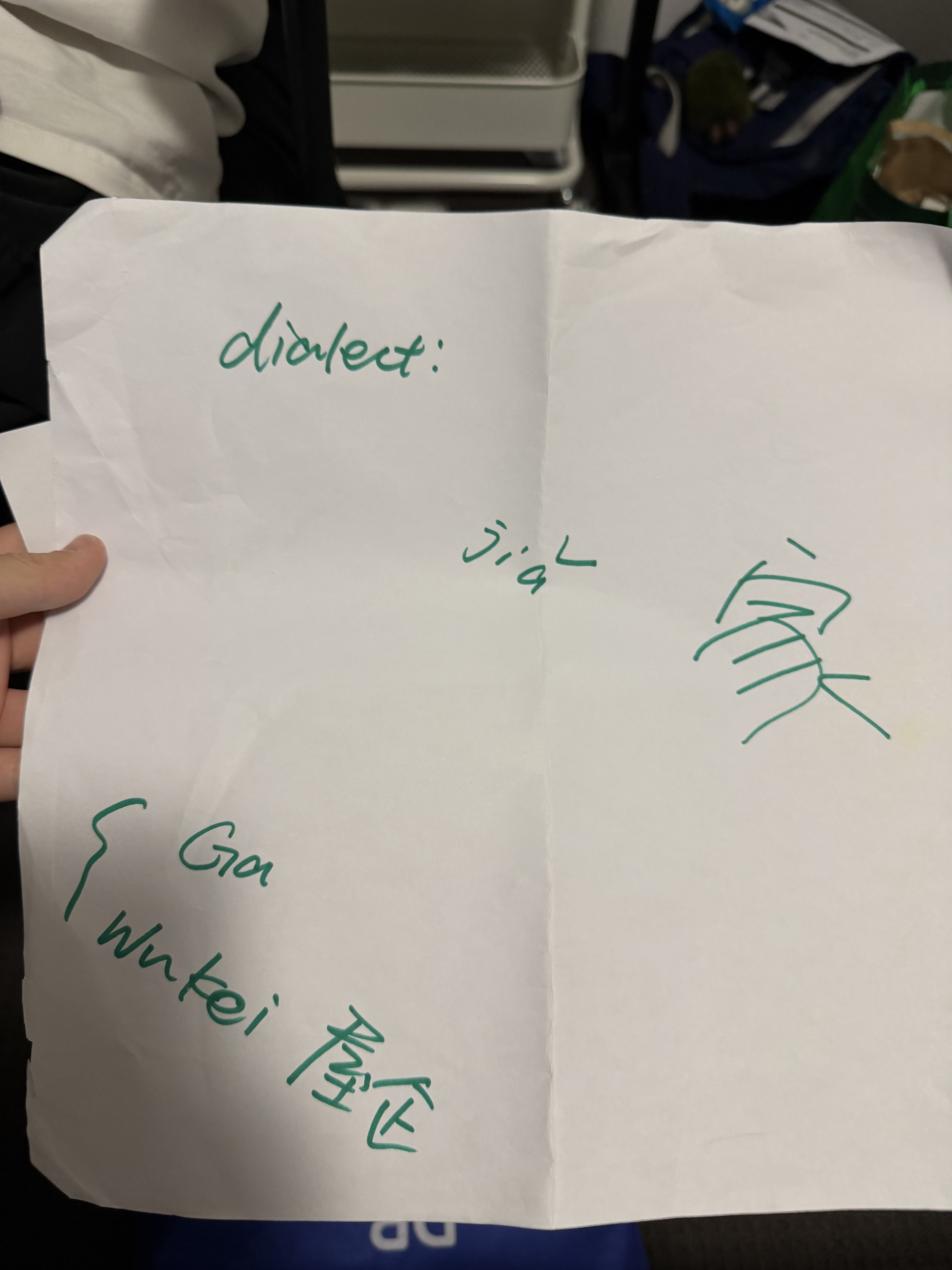
Students contributed the word “family” in their home languages, validating personal identity and positioning diverse linguistic knowledge as legitimate classroom resources.
L1-E2 Multilingual “Family” Poster#
L1-E3 Multilingual “Family” Poster#
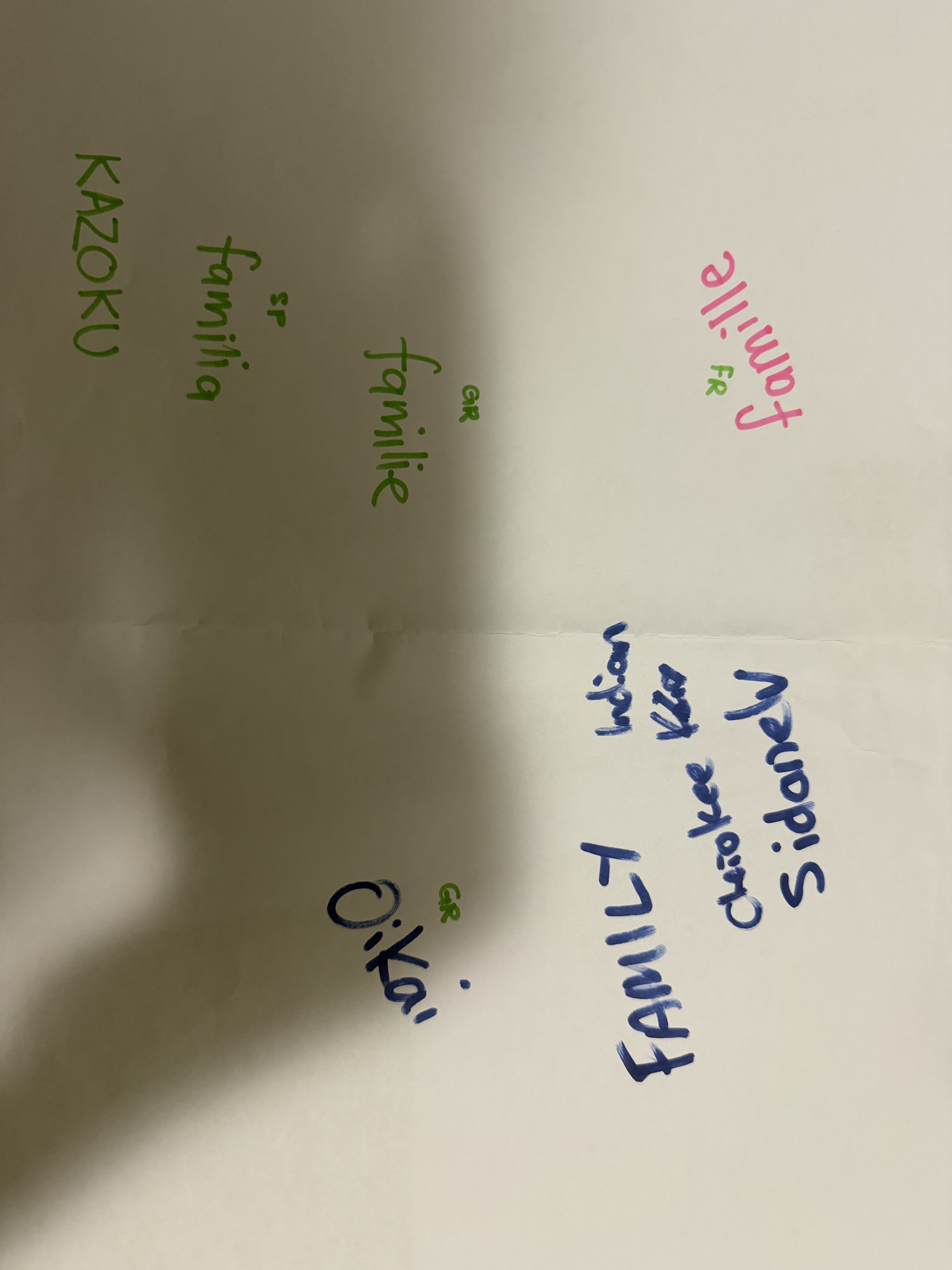
L1-E4 Multilingual “Family” Poster#
L1-E5 Multilingual “Family” Poster#
L1-E6 Mealtime Etiquette Support Sheet#
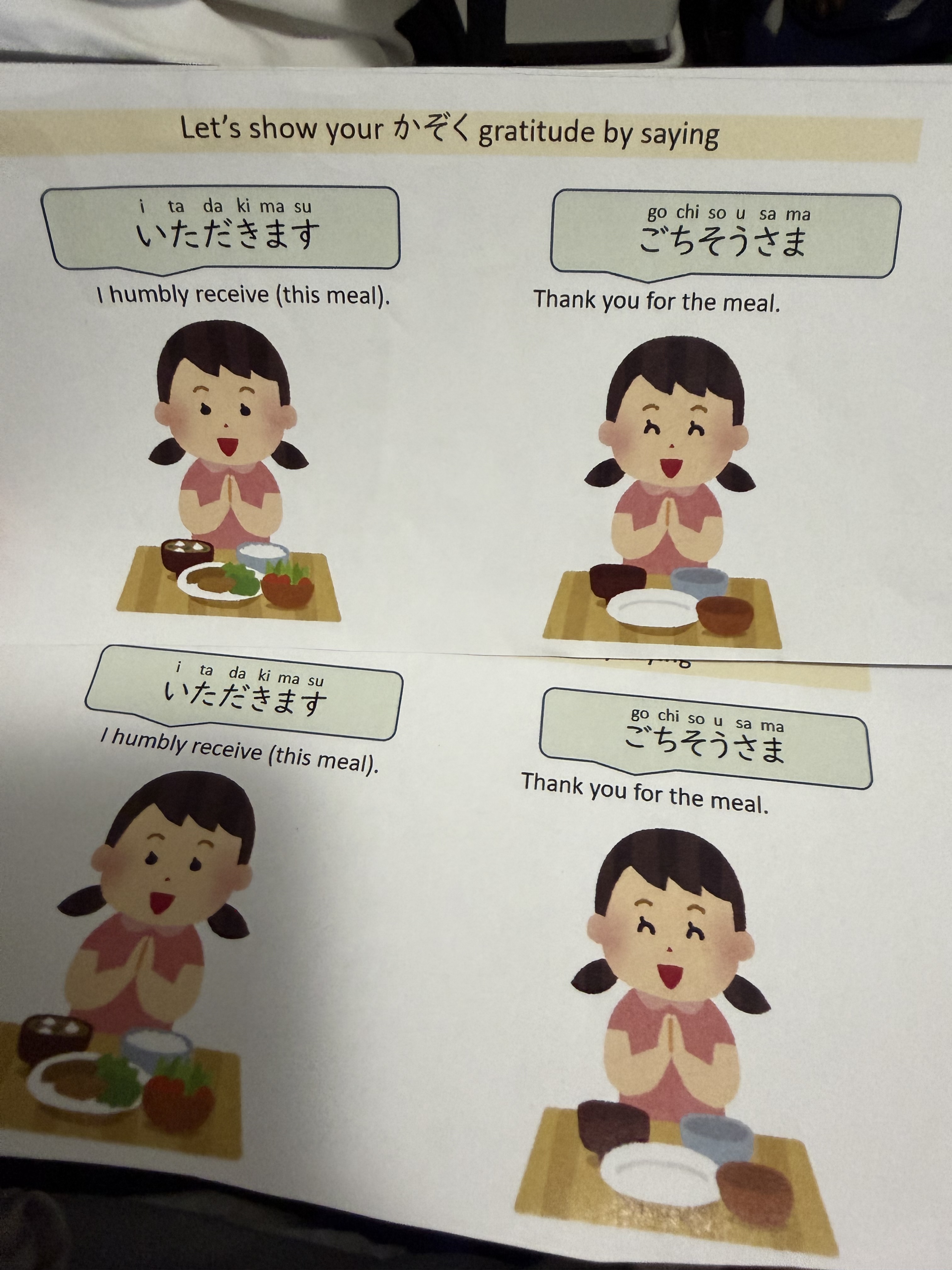
Introduced culturally embedded phrases such as “itadakimasu” and “gochisousama,” enabling students to understand Japanese cultural values around gratitude.
L1-E7 Classroom Etiquette Visual#

L1-E8 Classroom Etiquette Visual#
L1-E9 Classroom Etiquette Visual#
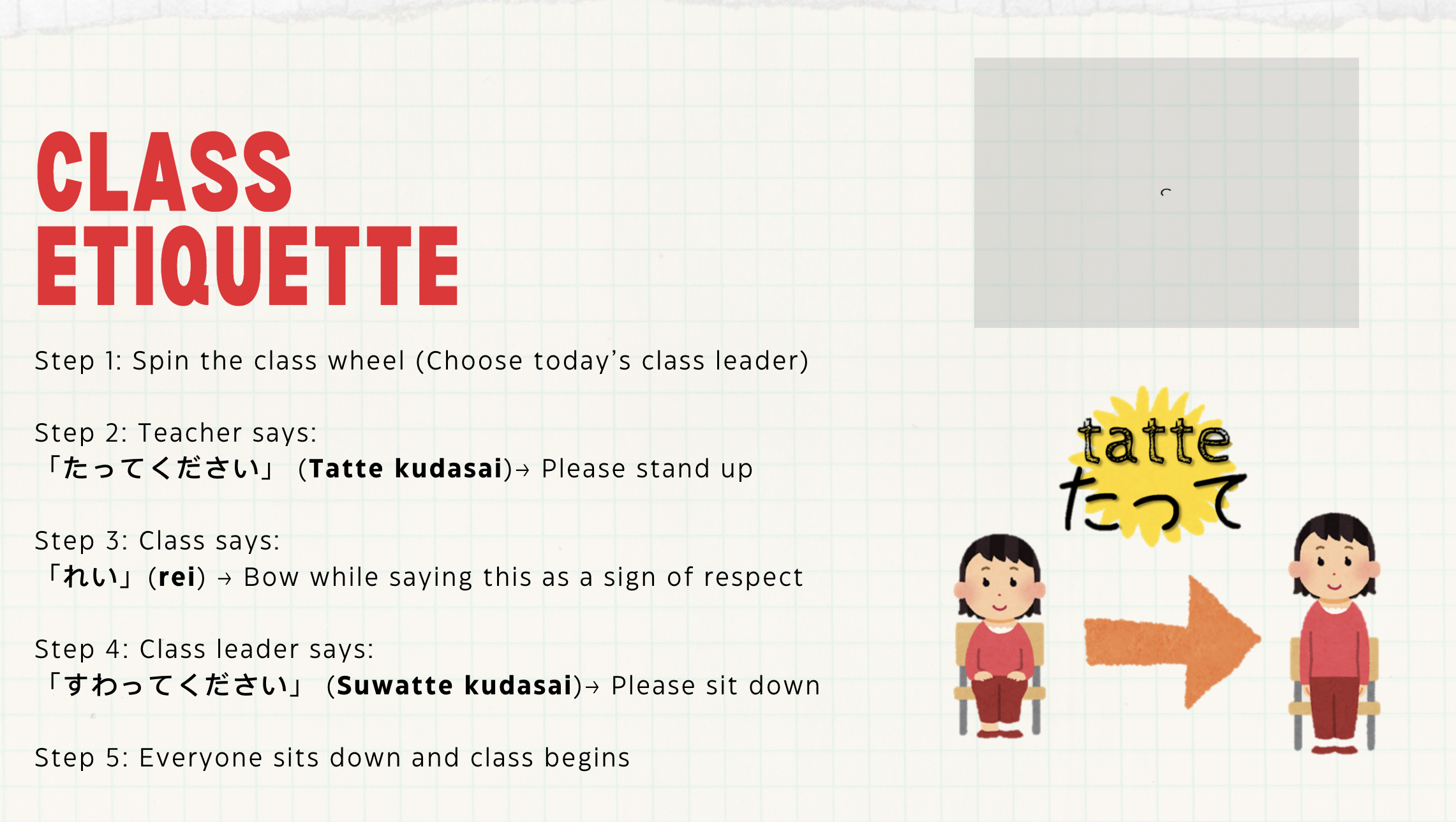
L1-E10 Classroom Etiquette Visual#
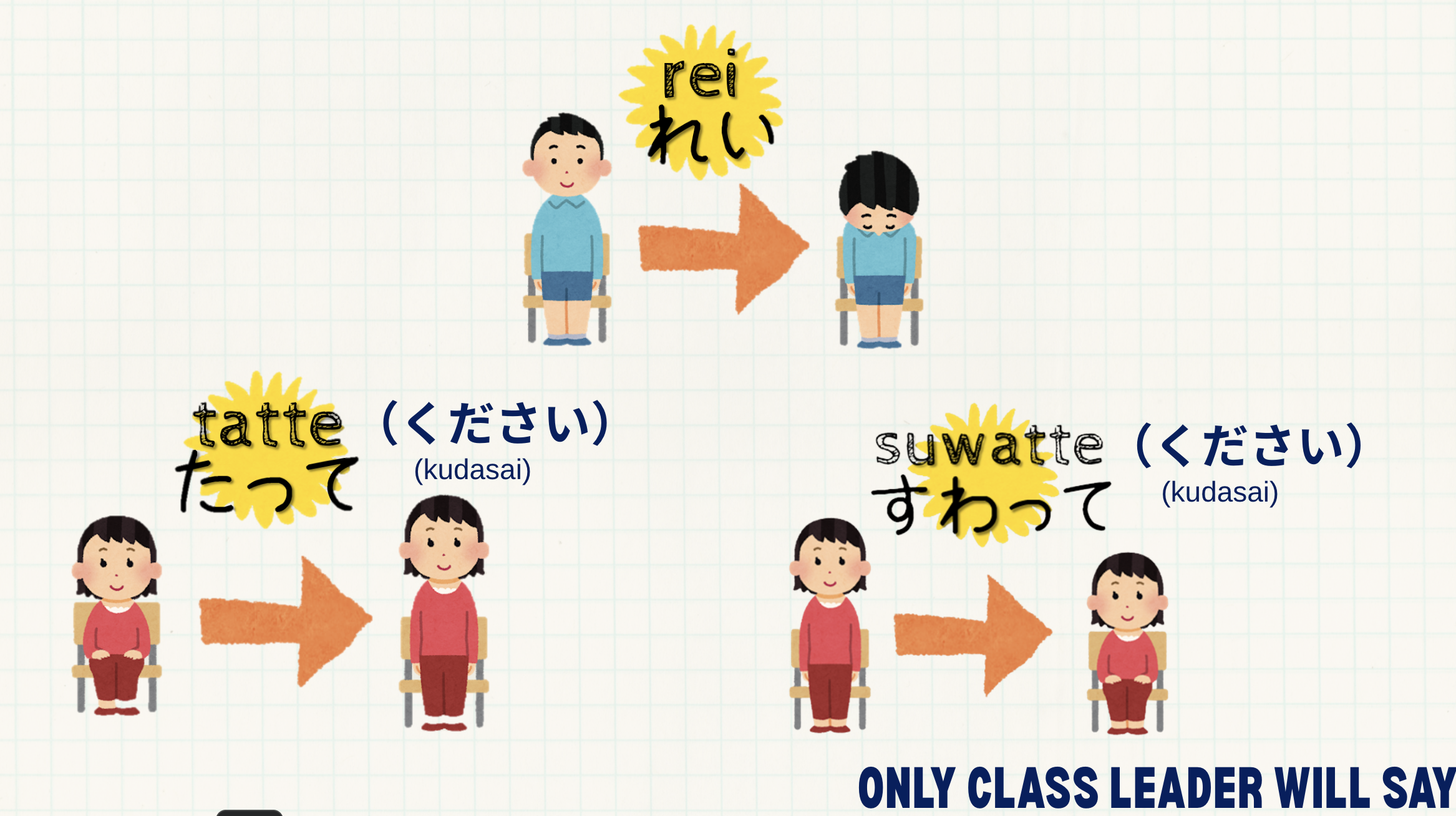
L2-V1 Mystery Box Family Game (Video)#
Students practised Japanese family vocabulary using a “mystery box” guessing game.
L2-E2 Peer Feedback Sample#
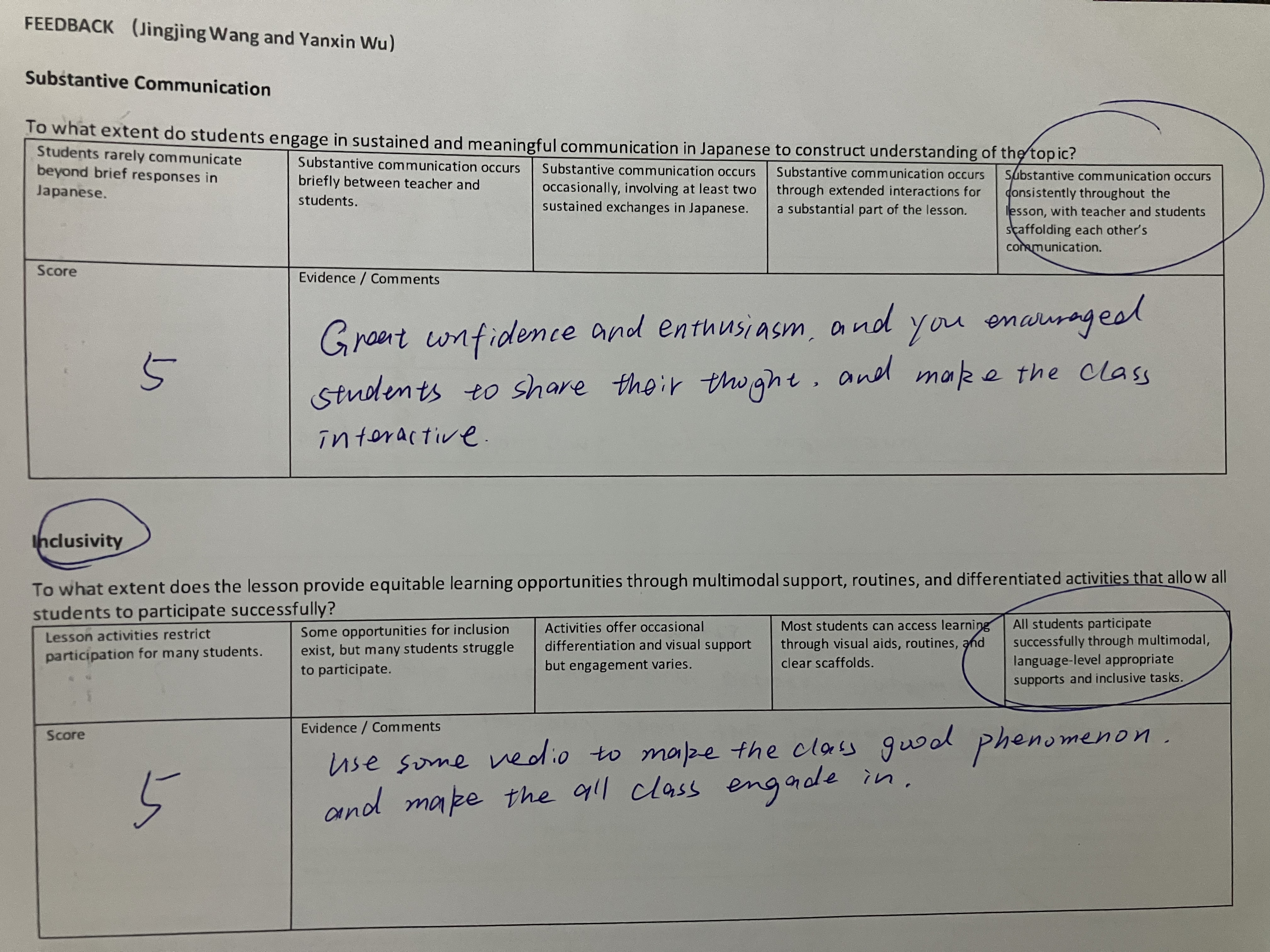
Students noted learning about cultural differences in how Japanese express family relationships.
L2-E3 Peer Feedback Sample#
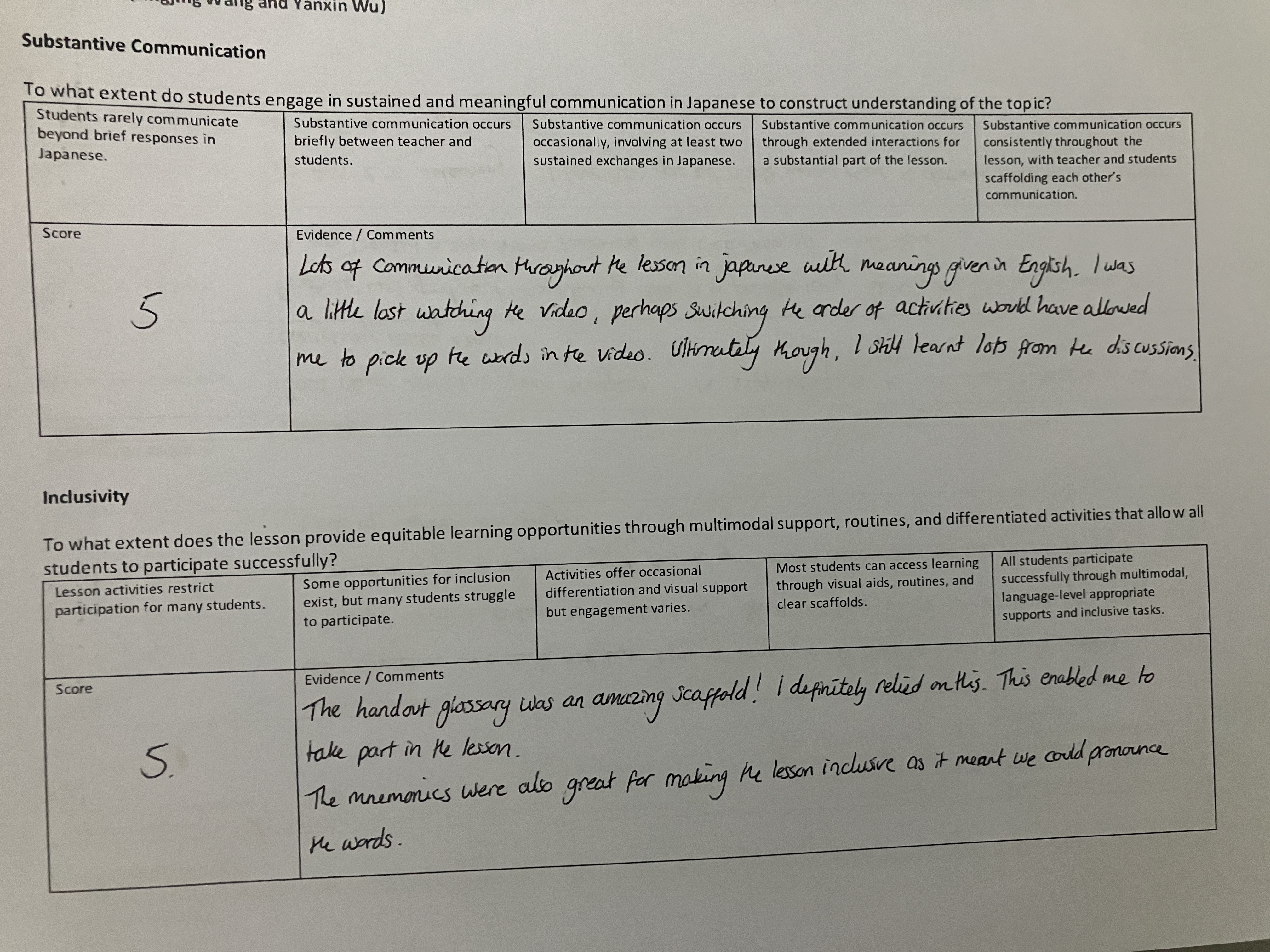
L2-E4 Peer Feedback Sample#
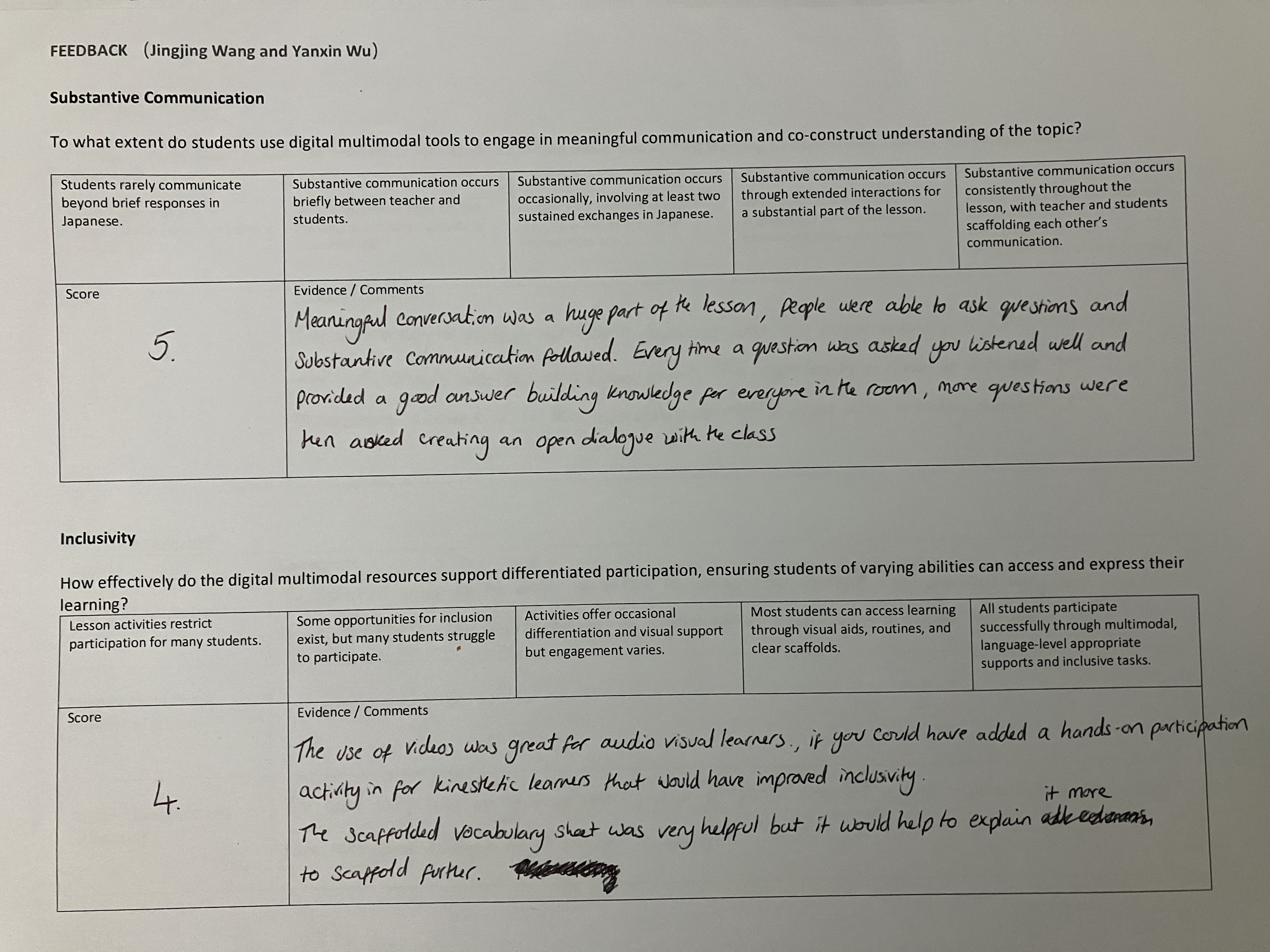
L3-V1 Kanji Demonstration (Video)#
This video shows the teacher’s explicit modelling of kanji structure, demonstrating the stroke order and visual origins of 母 and 父 from ancient script to modern Japanese.
L3-E2 Student Kanji Sample#
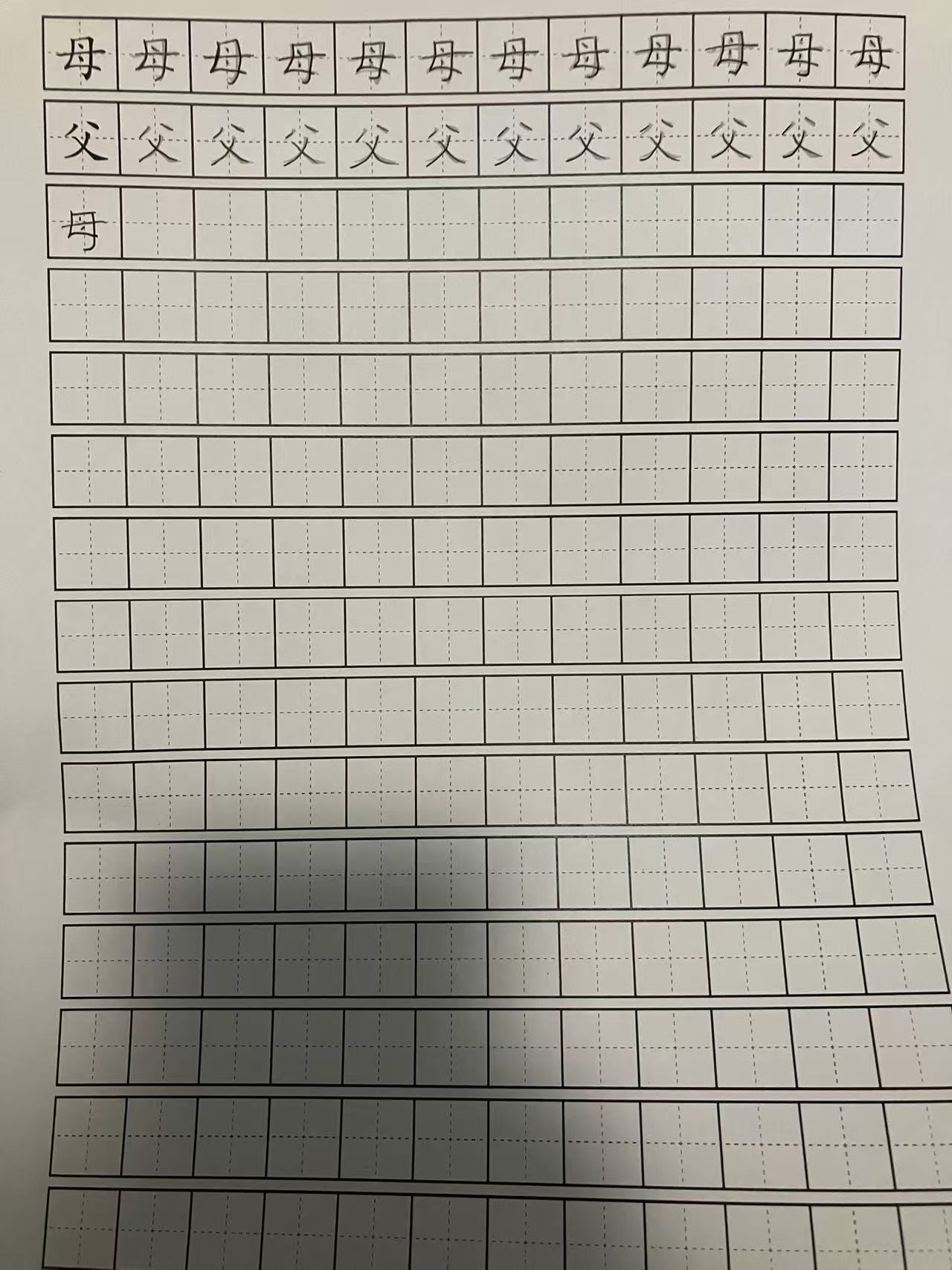
L3-E3 Student Kanji Sample#
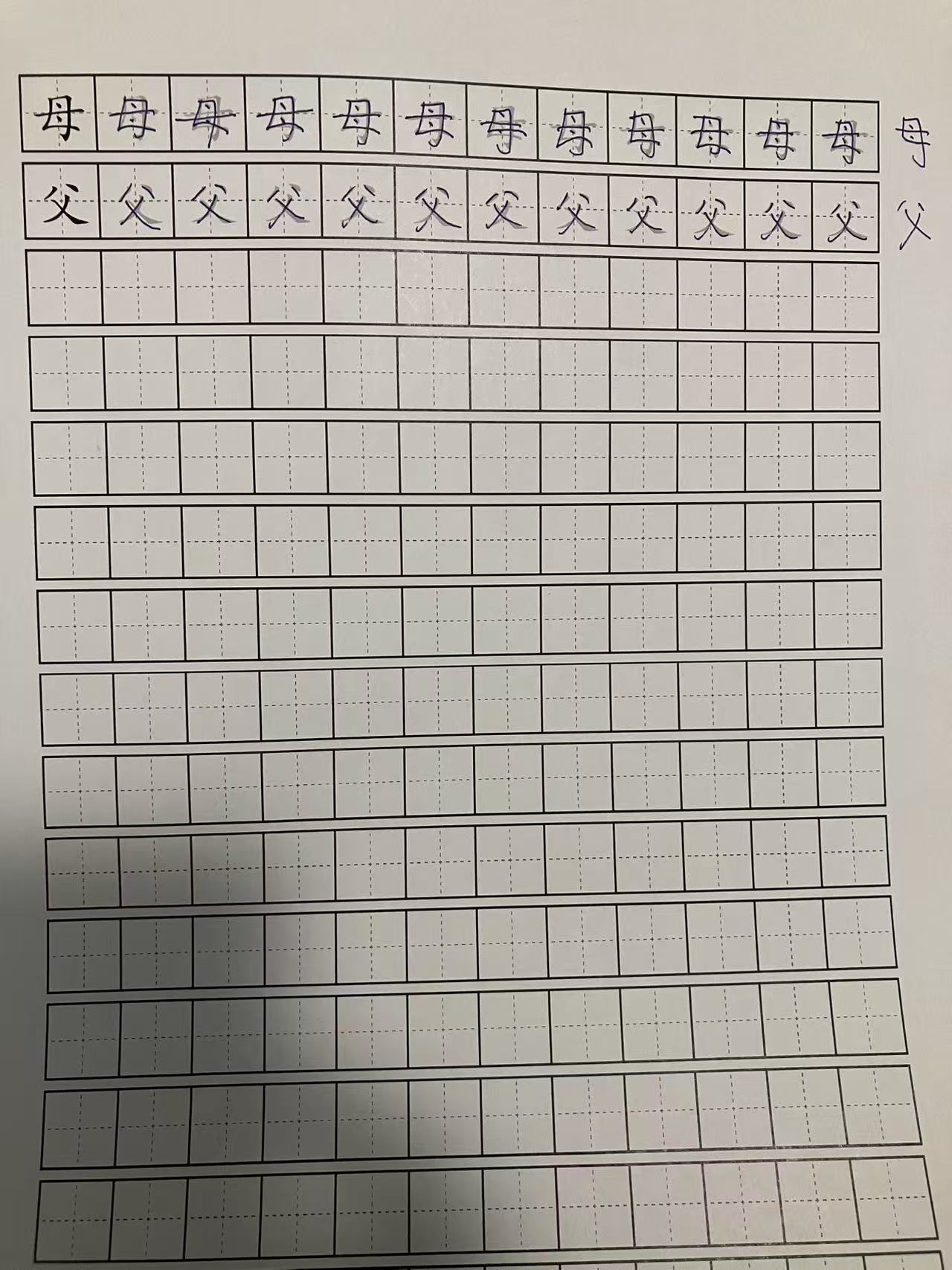
L3-E4 Student Kanji Sample#
L4-V1 Family Interview Activity (Video)#
Introduced the Japanese 抽選器 (chūsenki) for random grouping before conducting family interviews.
L4-E1 Interview Template#
Shows how students applied culturally appropriate expressions during interviews.
L4-E2 Interview Template#
L4-E3 Interview Template#