Analysis of Practice
Table of Contents
📁 Evidence Archive (Lessons 1–4)#
This page contains all evidence used in the A2 analysis.
Files are labelled with: Lesson → Evidence Type (E/V) → Number.
🟦 Lesson 1 Evidence#
L1-E1 Family Work Sample#
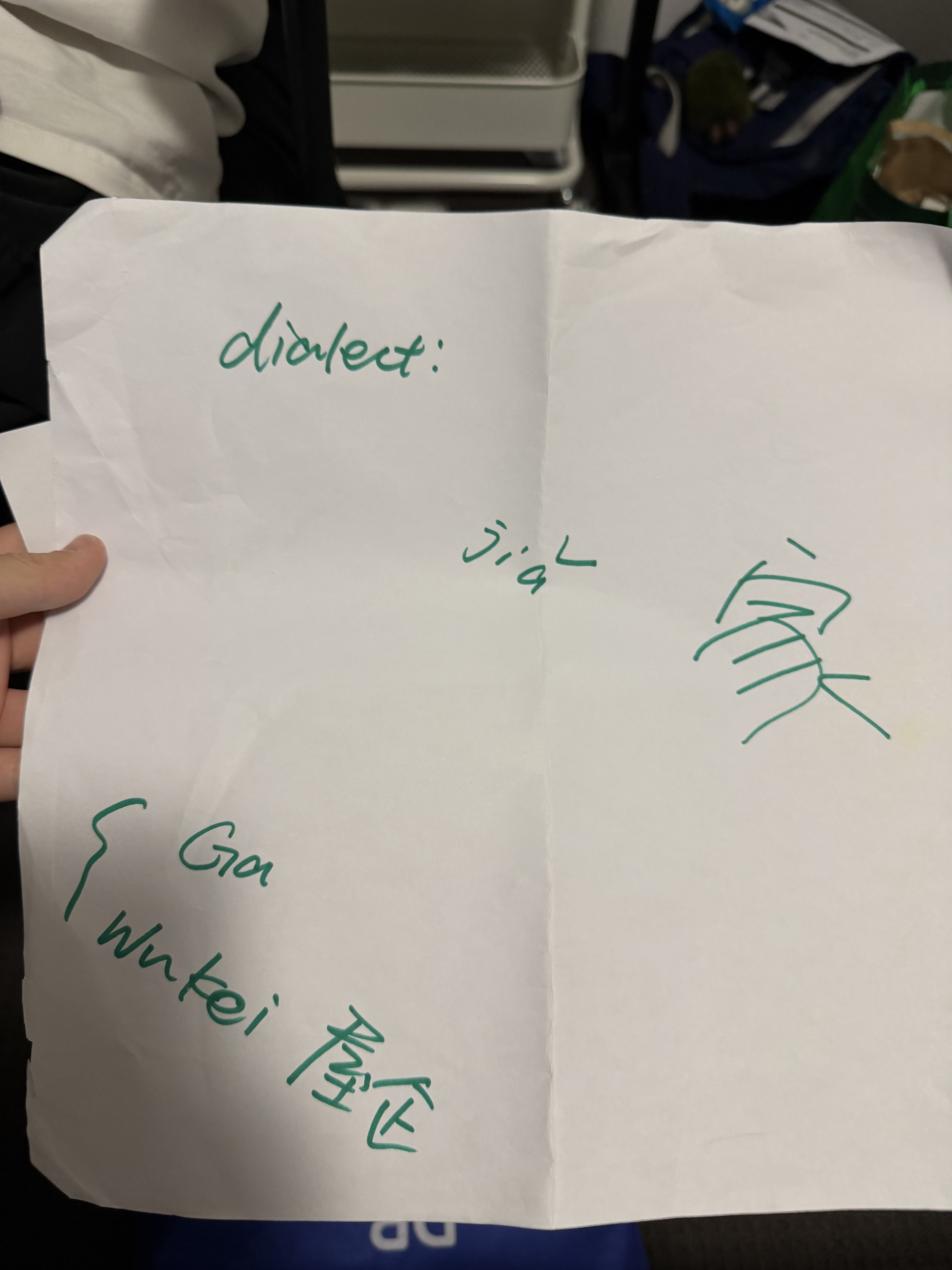
Students wrote the word “family” in their dialect/language, activating linguistic prior knowledge.
L1-E2 Family Work Sample#
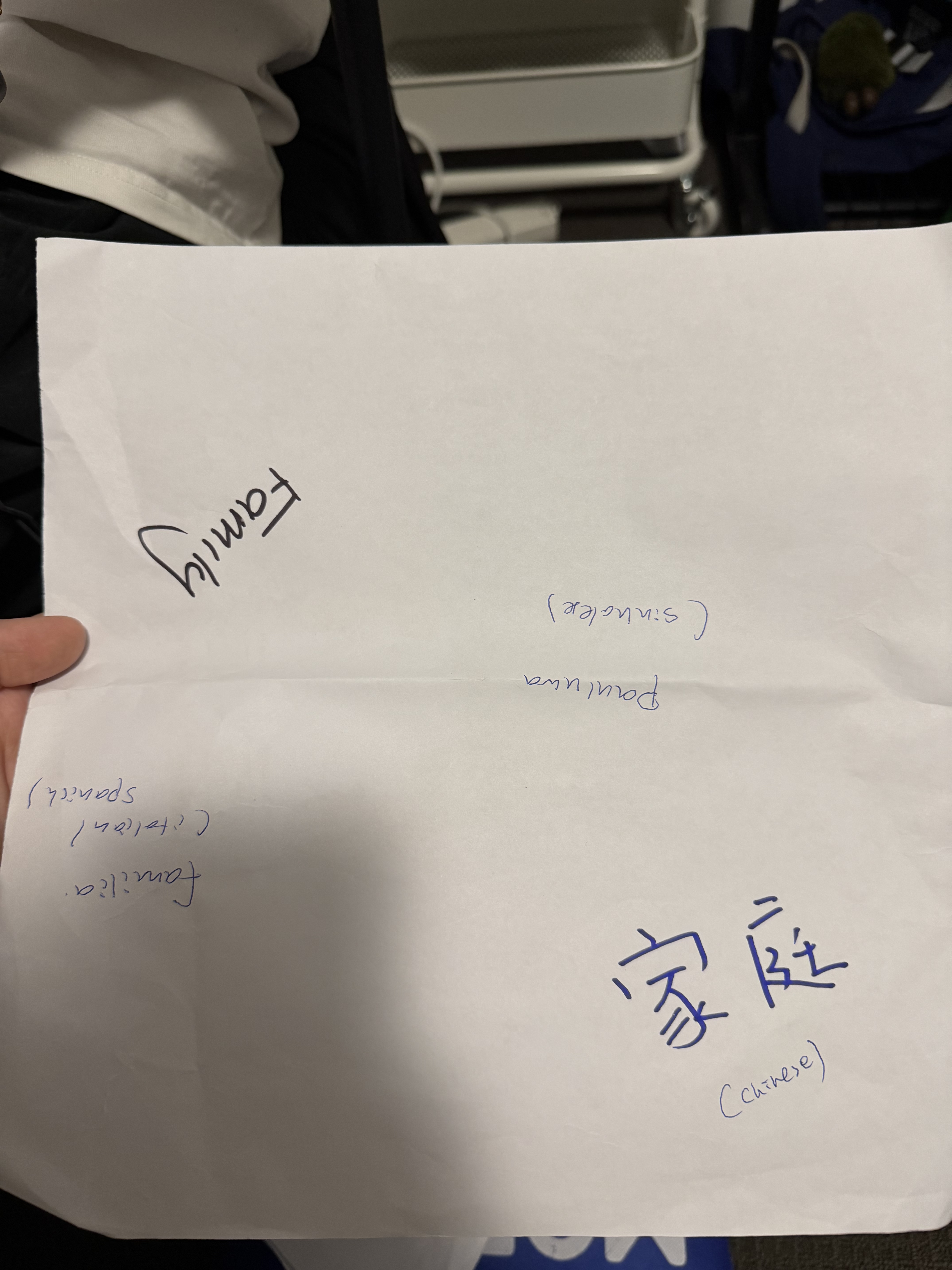
Highlights multilingual diversity and builds intercultural awareness.
L1-E3 Family Work Sample#
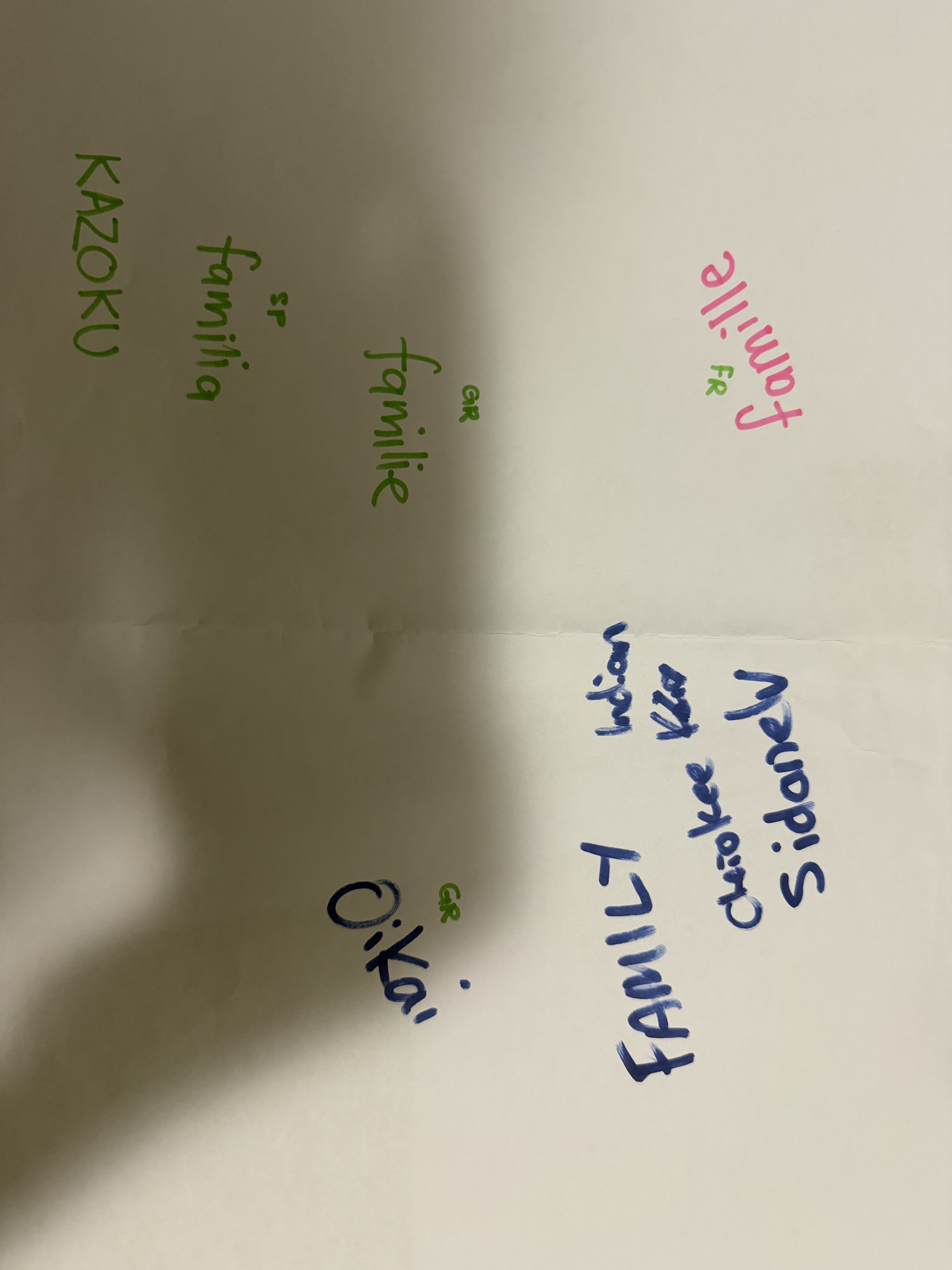
Demonstrates students comparing writing systems and languages.
L1-E4 Family Poster#
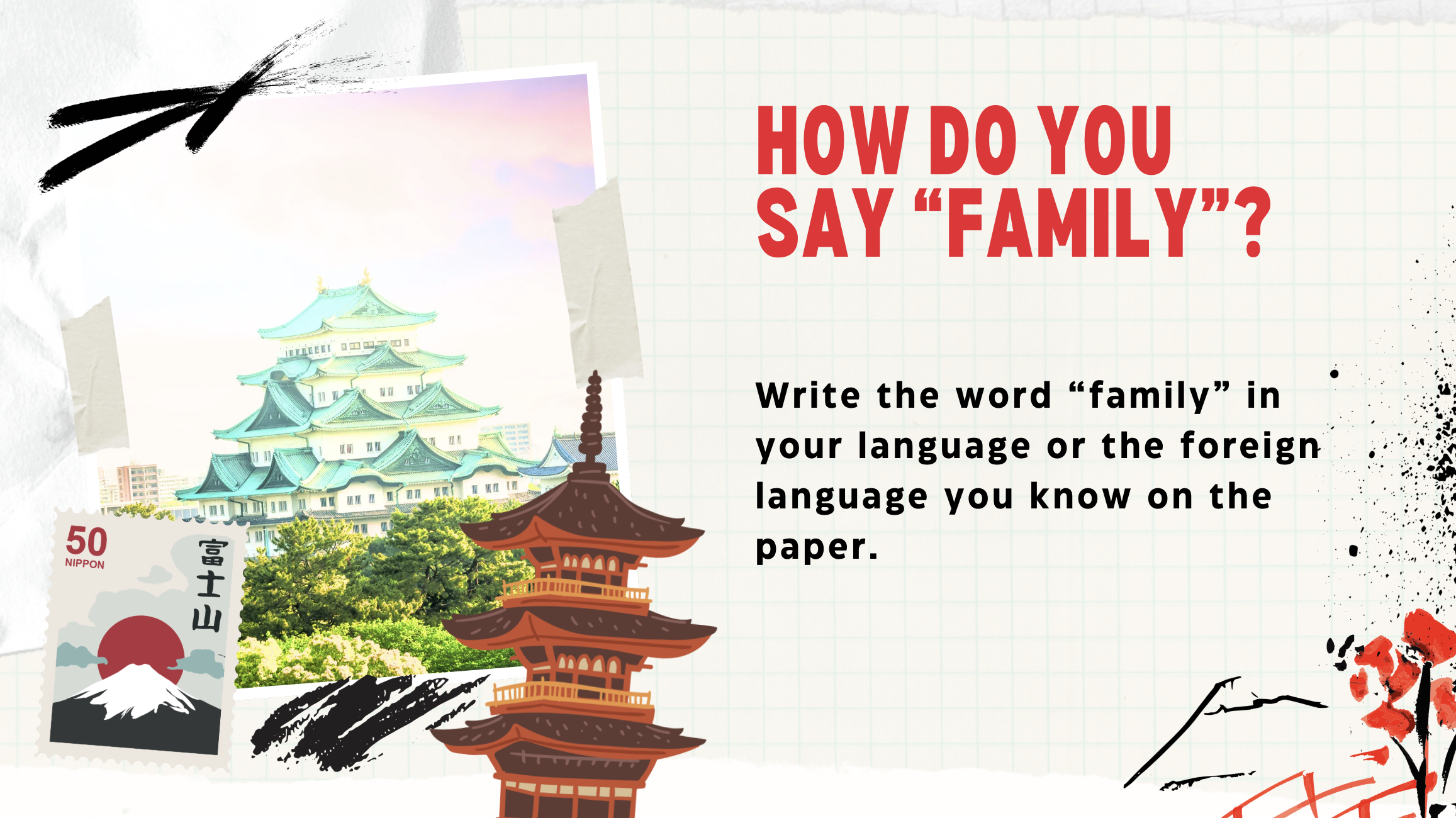
A collective multilingual poster used as a reference during later Japanese lessons.
L1-E5 Family Poster (Version 2)#
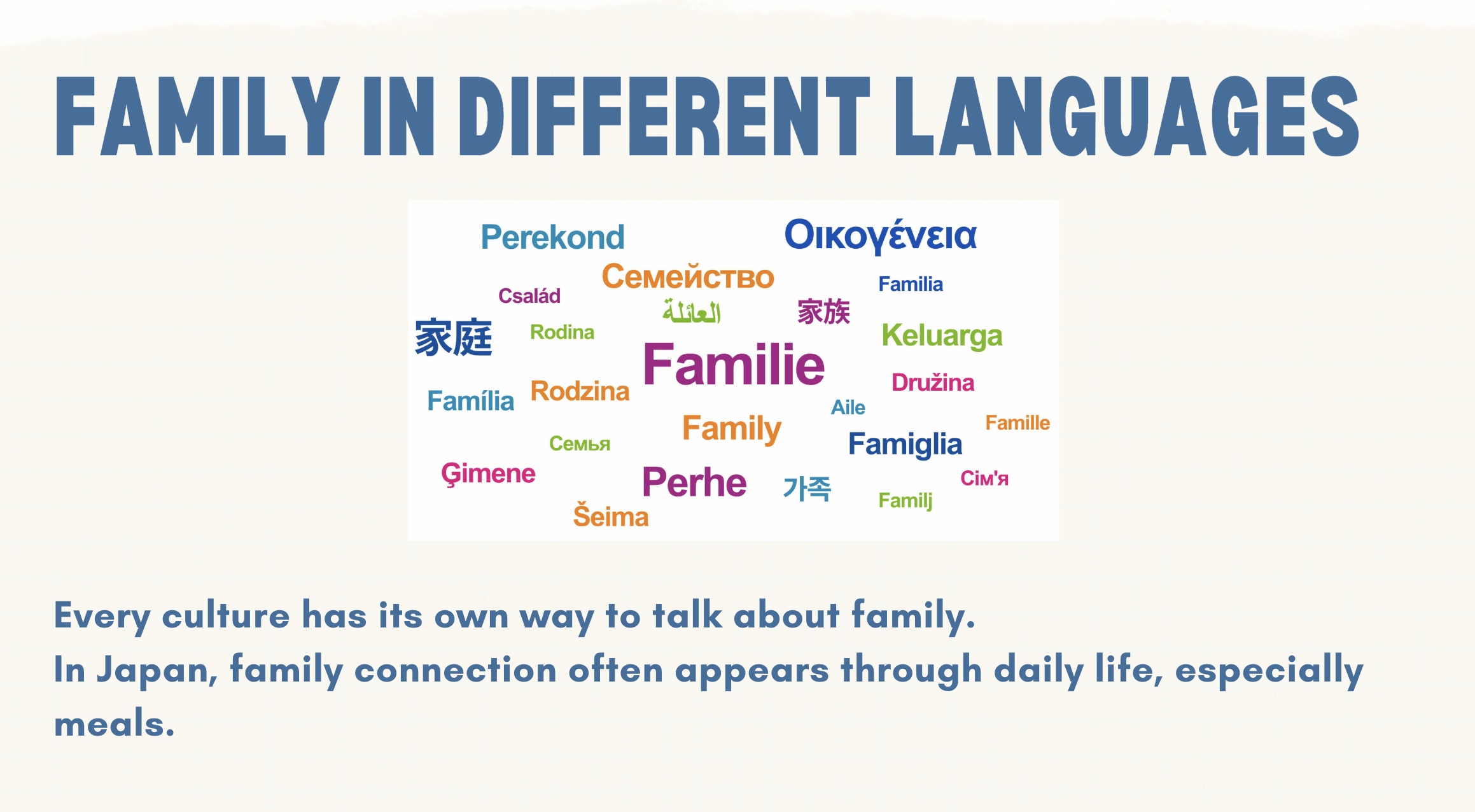
Visual anchor supporting students’ conceptual understanding of family across cultures.
L1-E6 Support Sheet (Itadakimasu & Gochisousama)#
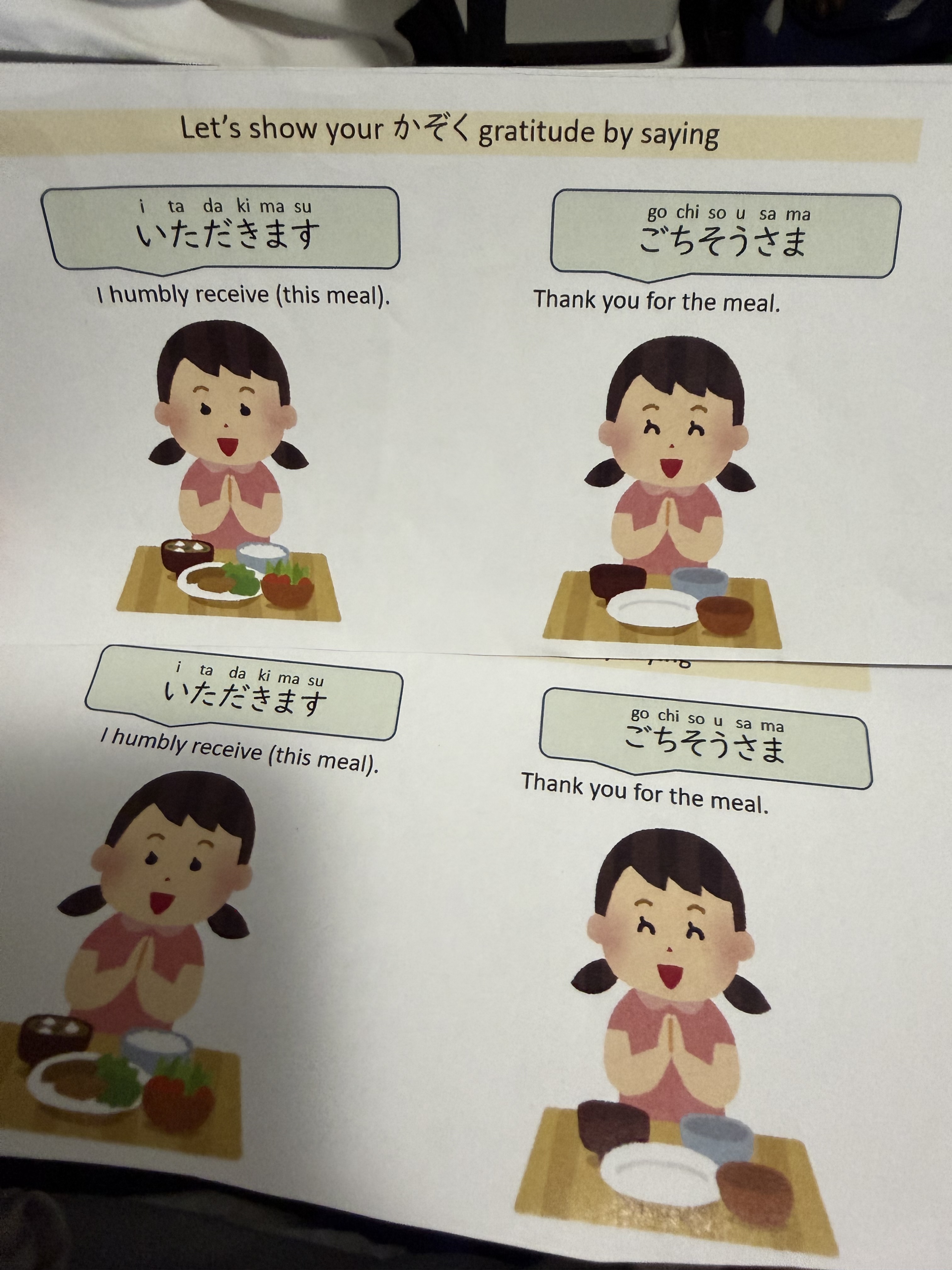
This support sheet was provided to ensure students had accessible language scaffolds when engaging with culturally based mealtime expressions.
By giving learners key phrases in a clear, student-friendly format, the resource reduced cognitive load and prevented hesitation or embarrassment during interactive tasks.
L1-E7 Meal Memory Match Cards#
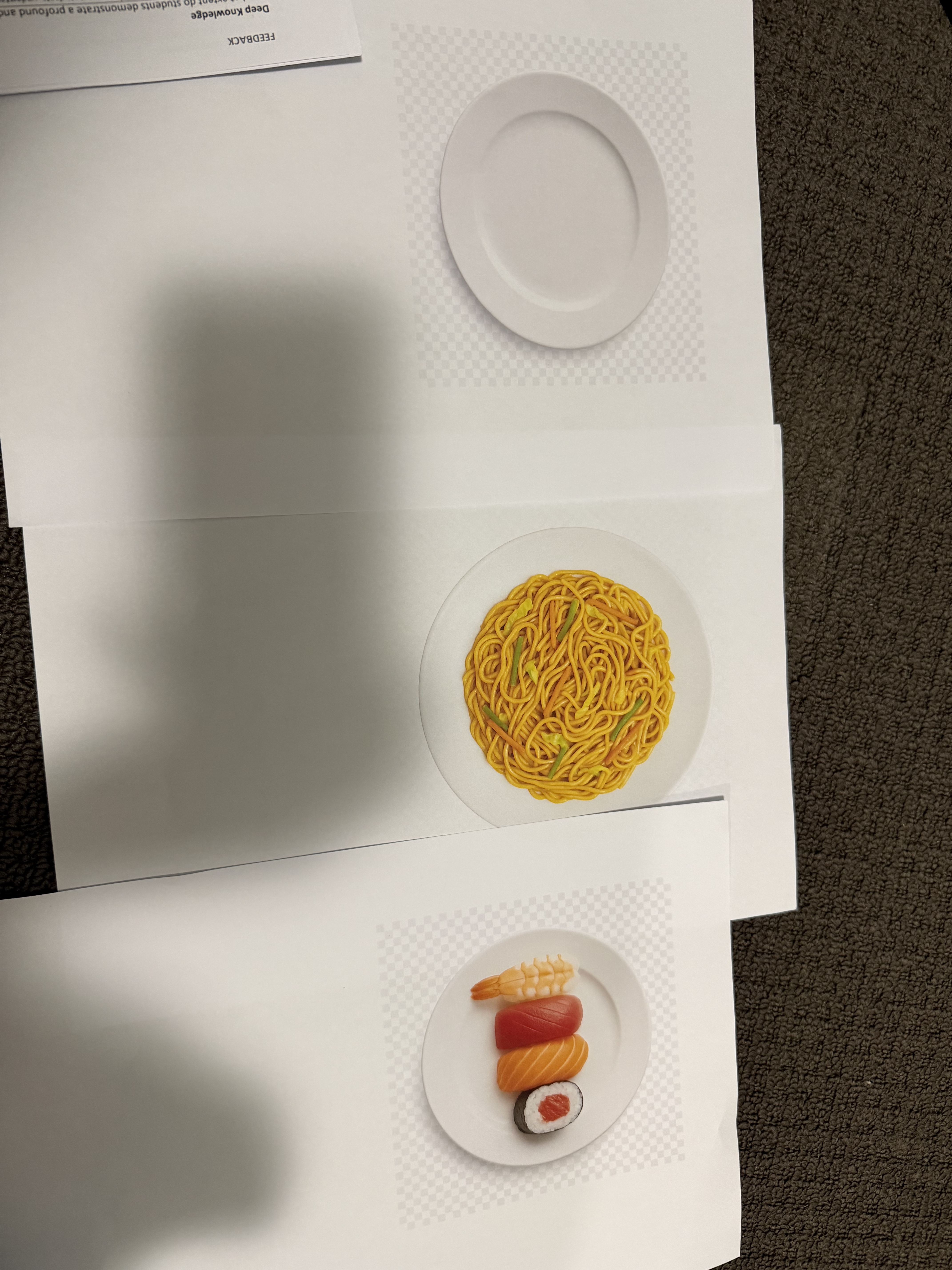
Cards used to scaffold Lesson 1 vocabulary consolidation through a memory game.
L1-E8 Classroom Etiquette Slide 1#
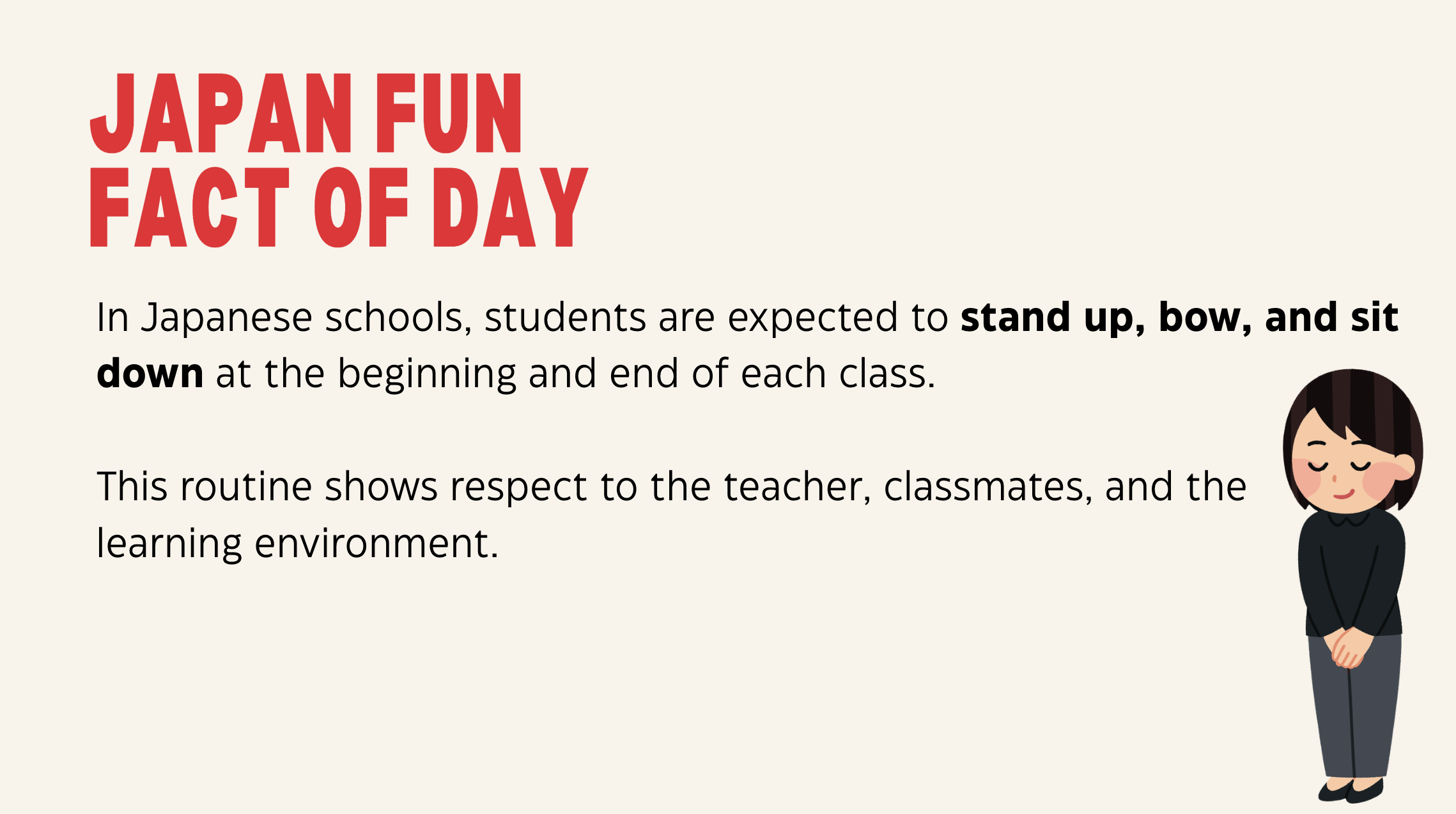
Introduced Japanese classroom language and etiquette.
L1-E9 Classroom Etiquette Slide 2#
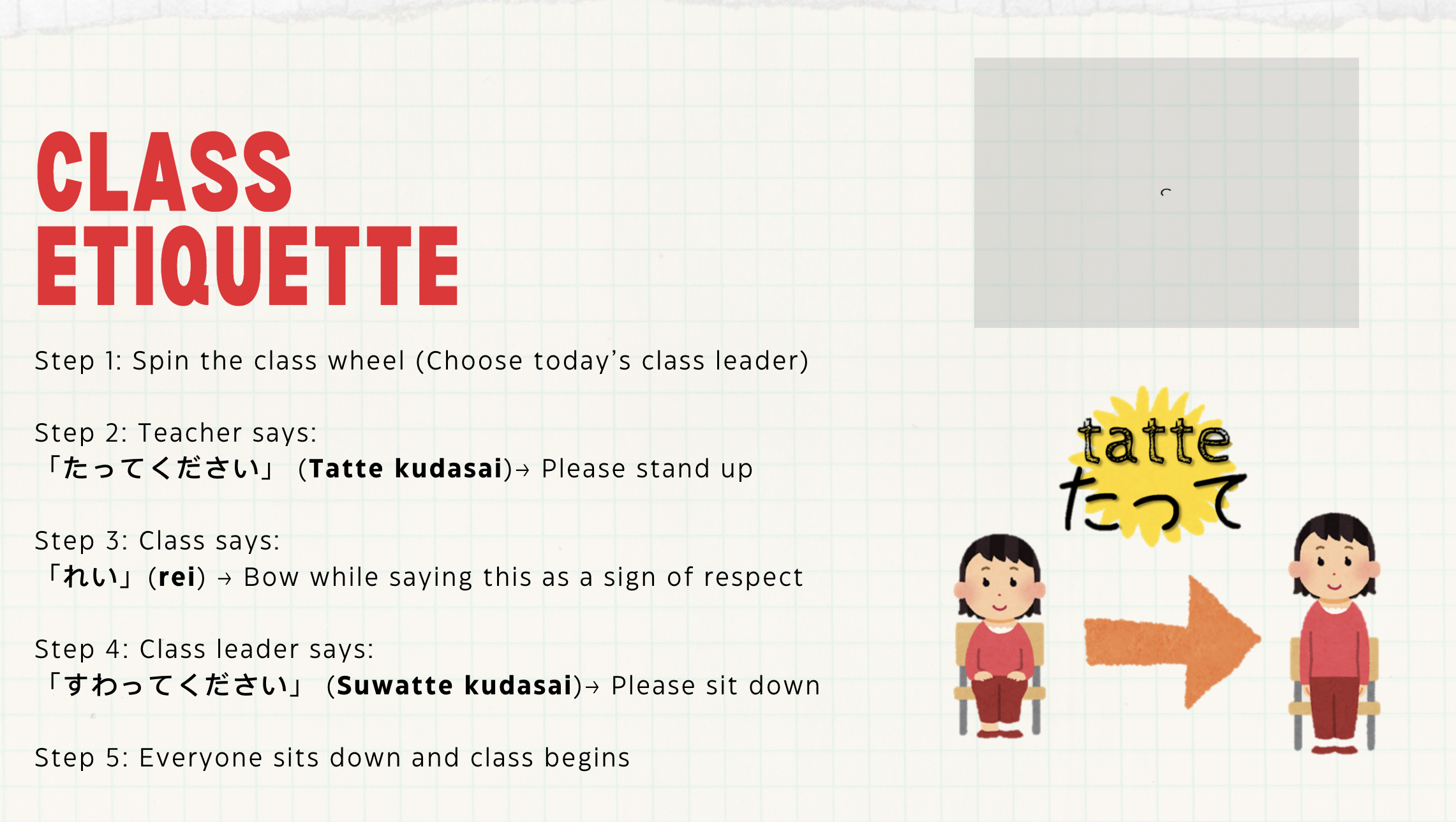
Reinforced appropriate Japanese expressions for classroom interaction.
L1-E10 Classroom Etiquette Slide 3#
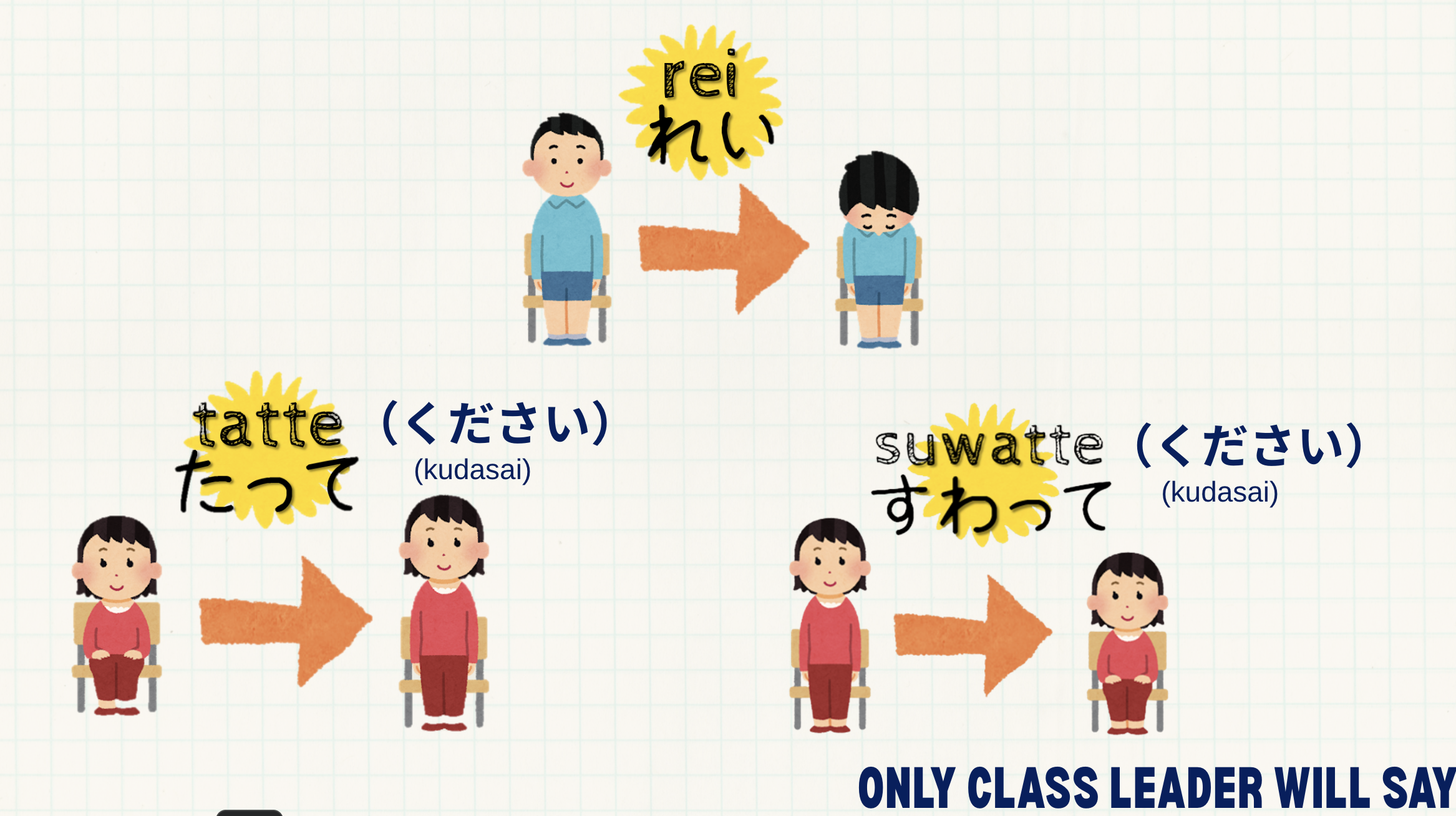
Provided additional modelling for understanding etiquette phrases.
🟩 Lesson 2 Evidence#
L2-V1 Mystery Box Family Game (Video)#
> Students practised Japanese family vocabulary using a “mystery box” guessing game.L2-E1 Mystery Box Prompt#
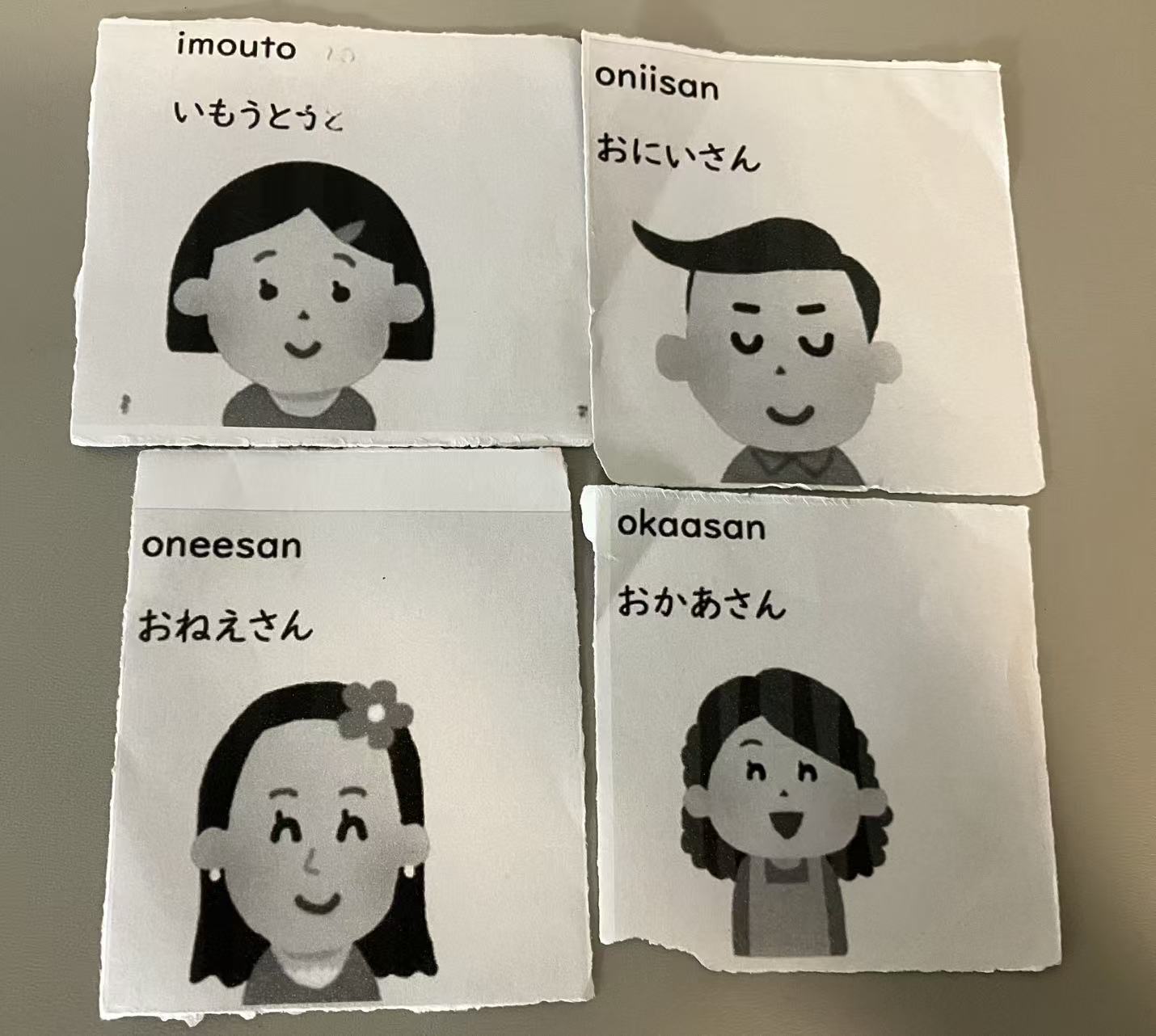
These cards show how the mystery-box task positioned students to retrieve and use newly learned family vocabulary in an authentic, engaging context.
By selecting a hidden card and performing the meaning non-verbally, students were required to draw on their prior exposure to the target words and interpret peers’ representations.
This design strengthened memory through multimodal reinforcement and supported active participation, as every student was responsible for contributing meaning to the learning environment.
The prompt illustrates intentional planning to maximise engagement while deepening language recall through purposeful prediction and interaction.
L2-E2 Peer Feedback Sample 1#
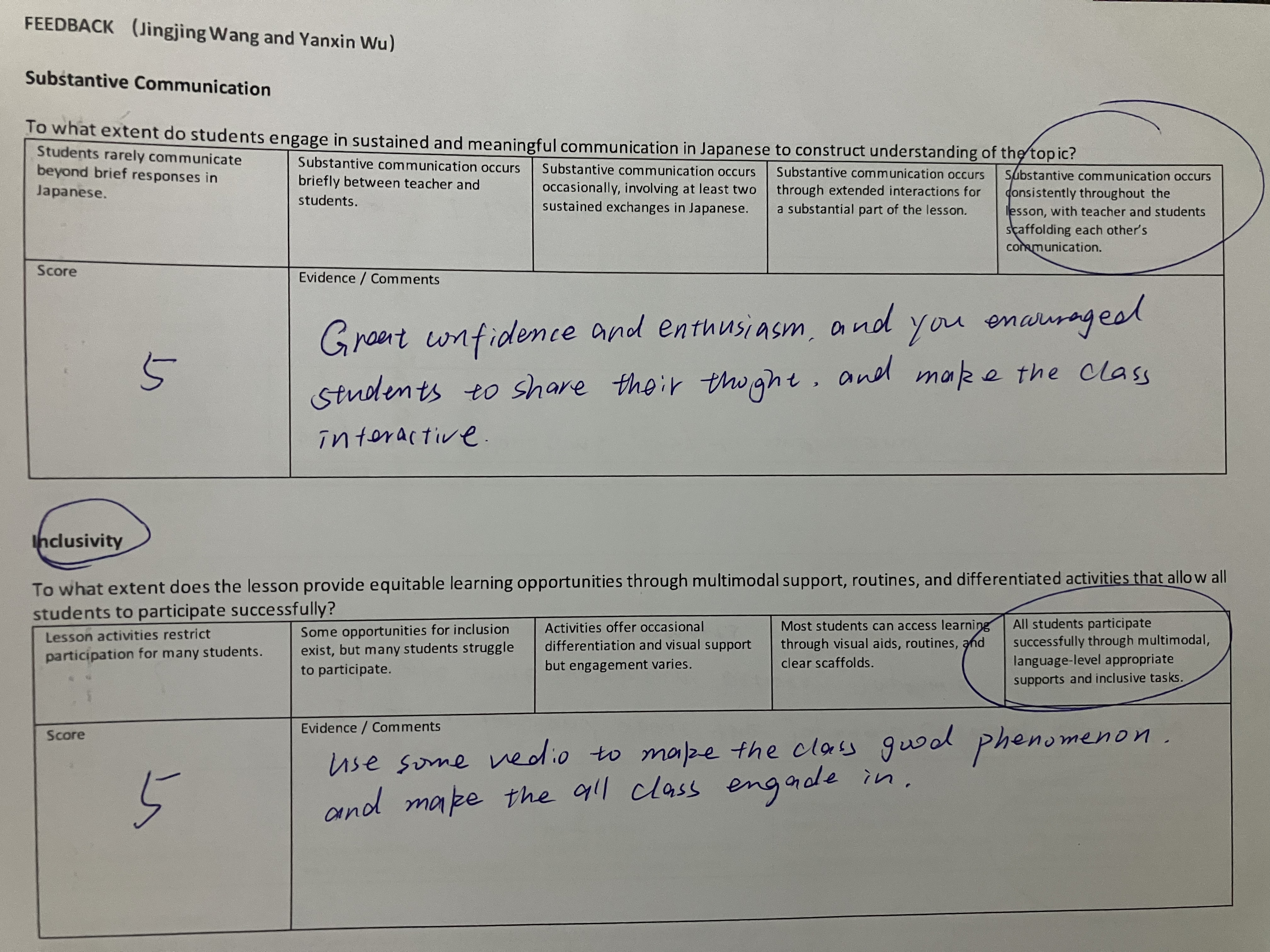
Peer feedback demonstrating analysis of lesson structure.
L2-E2 (2) Peer Feedback Sample 2#
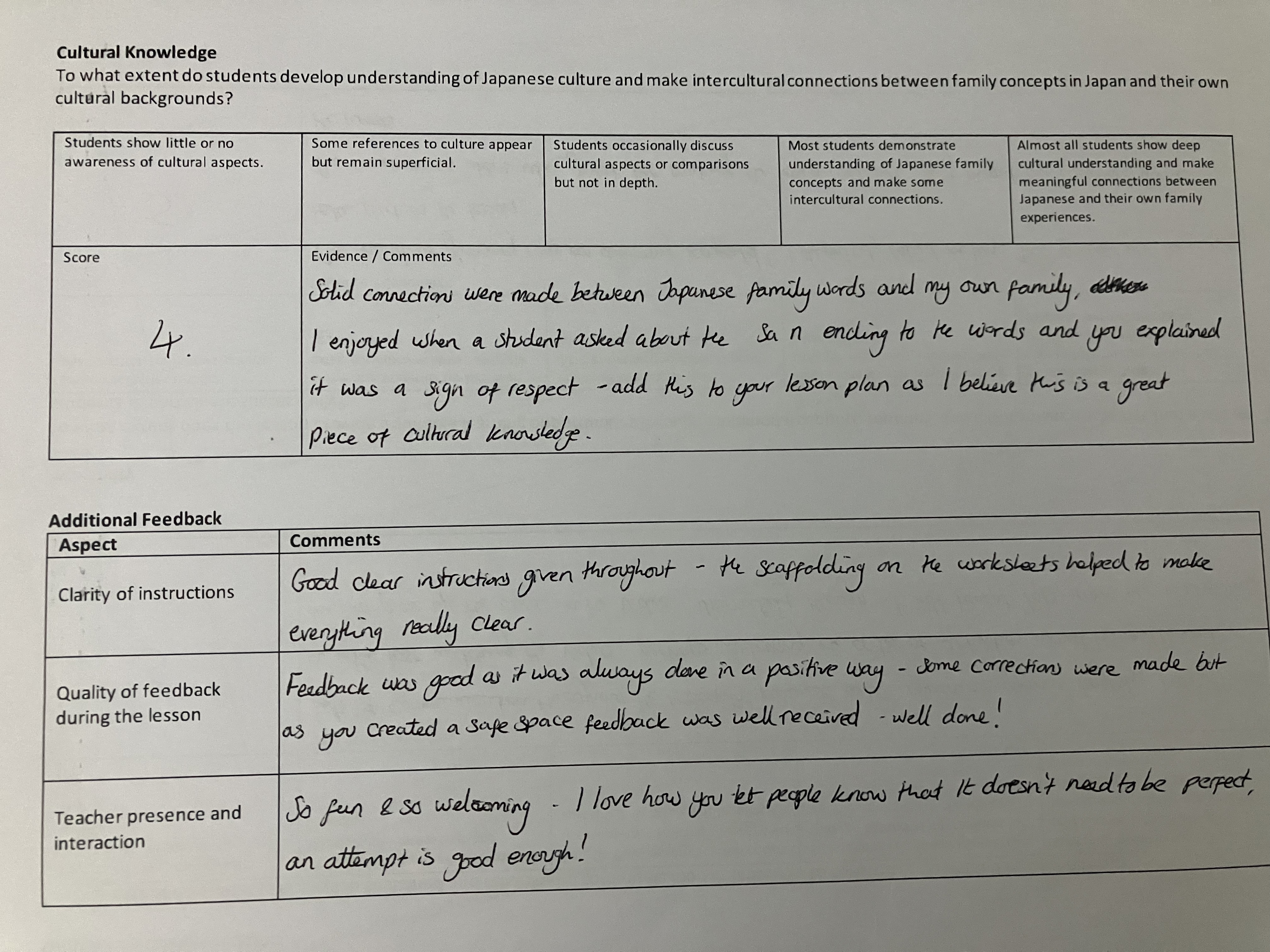
Feedback focused on sequencing and clarity.
L2-E3 Peer Feedback Sample 3#
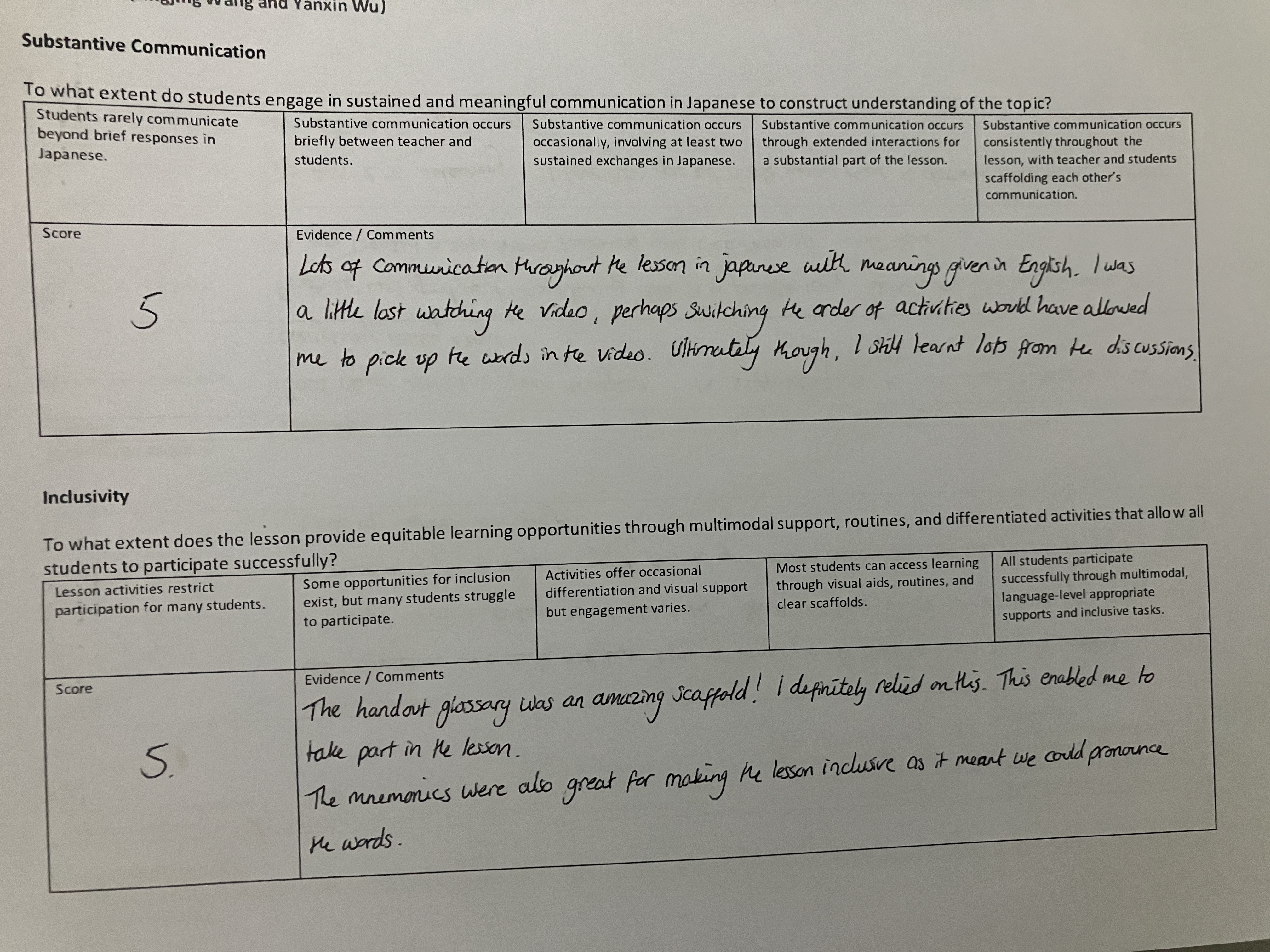
Noted strengths in student engagement.
L2-E4 Peer Feedback Sample 4#
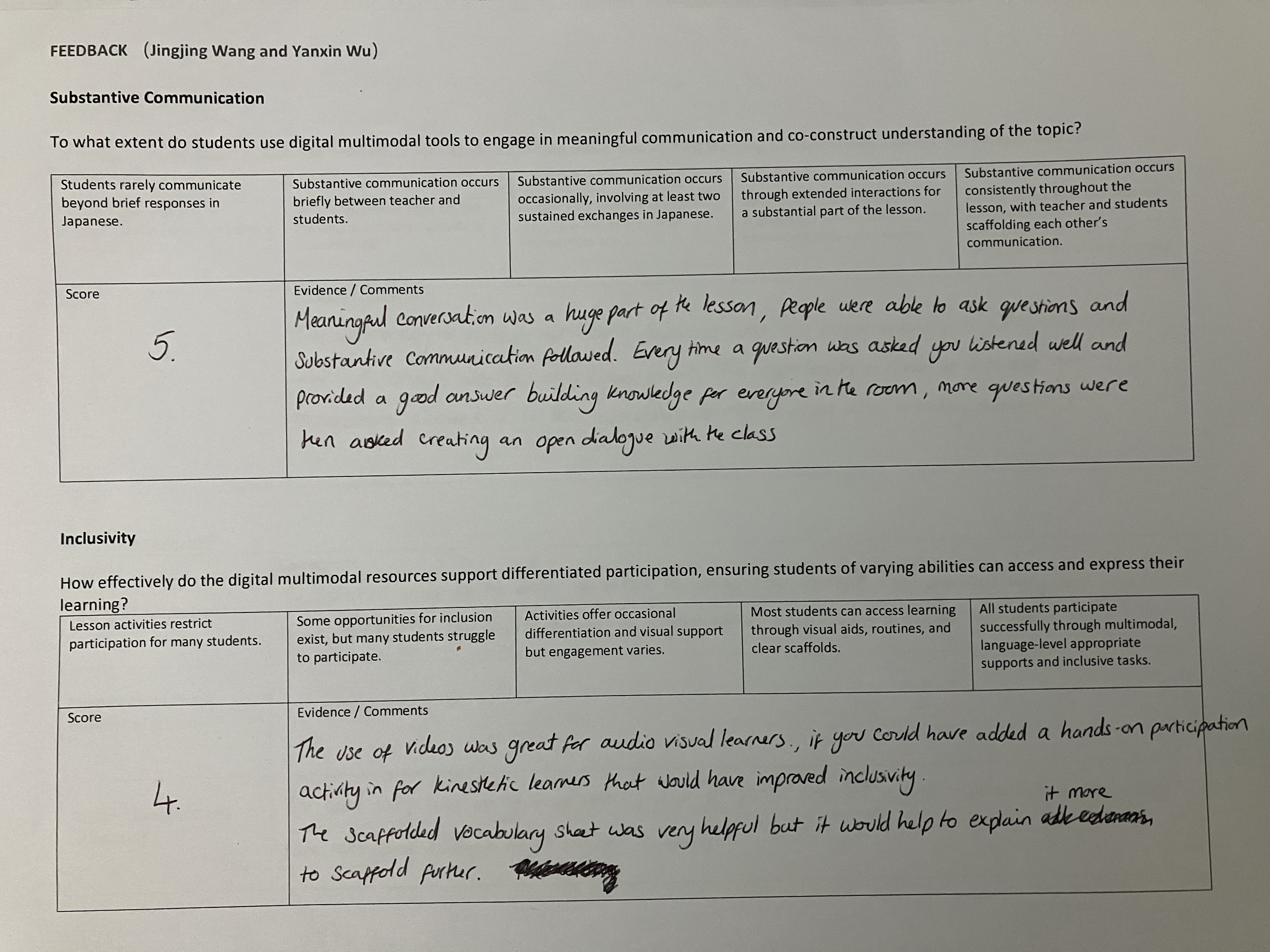
Emphasised quality learning environment considerations.
🟨 Lesson 3 Evidence#
L3-V1 Kanji Demonstration (Video)#
> This video shows the teacher’s explicit modelling of kanji structure, demonstrating the stroke order and visual origins of 母 and 父 from ancient script to modern Japanese.L3-E1 Snail Break Time Slide#
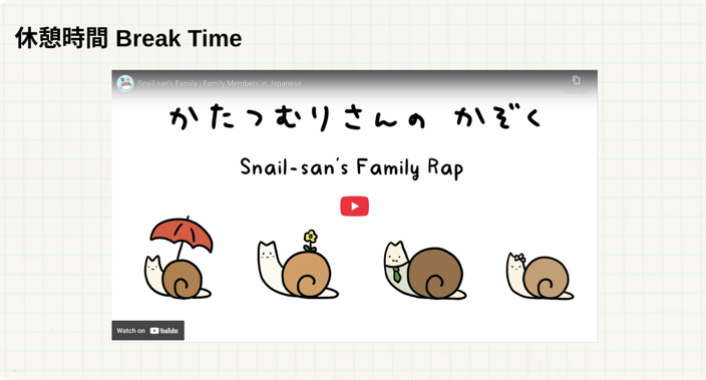
A culturally relevant transition activity connected to Japanese media.
L3-E2 Kanji Student Work 1#
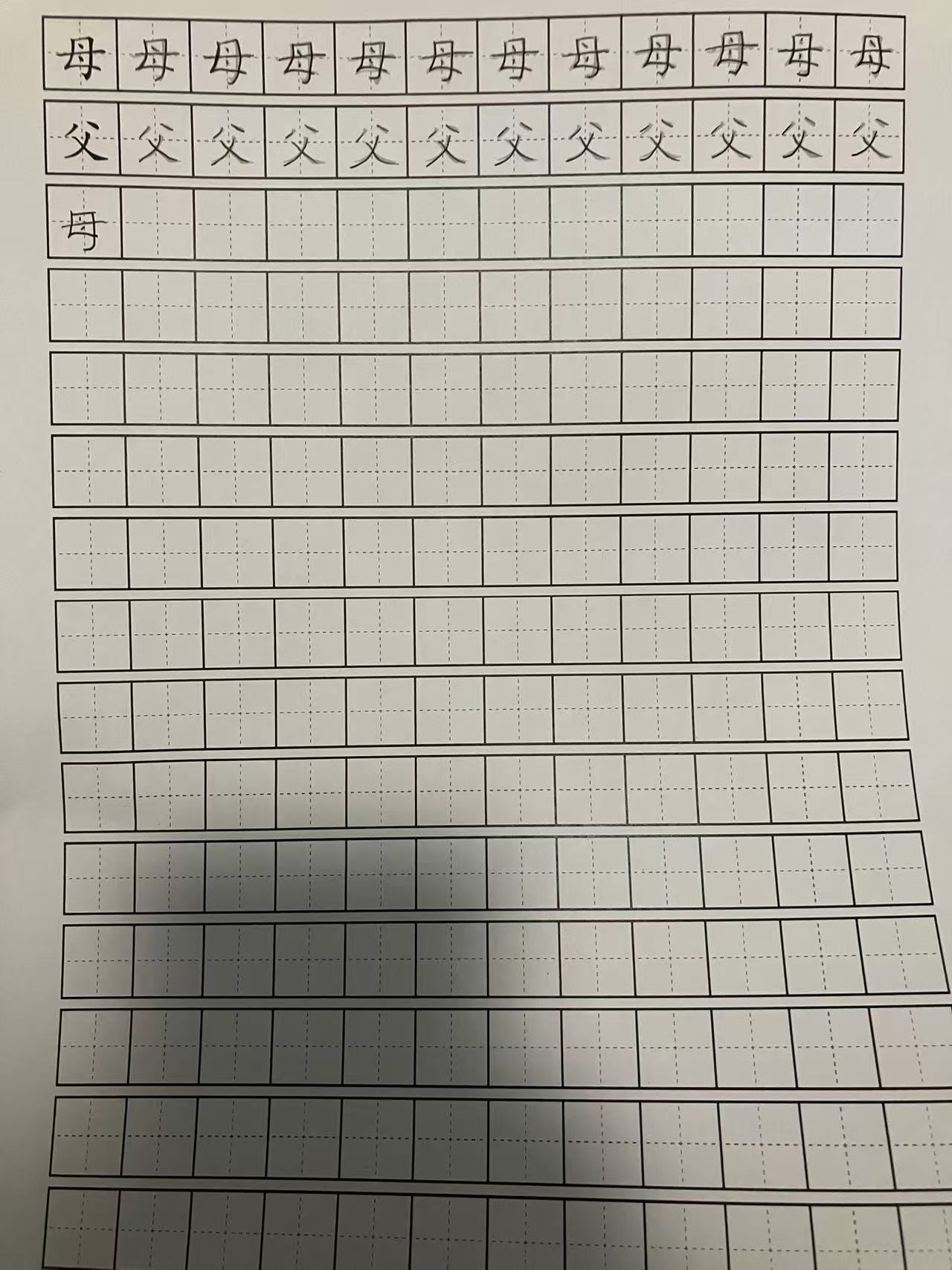
Early-stage kanji writing practice.
L3-E3 Kanji Student Work 2#
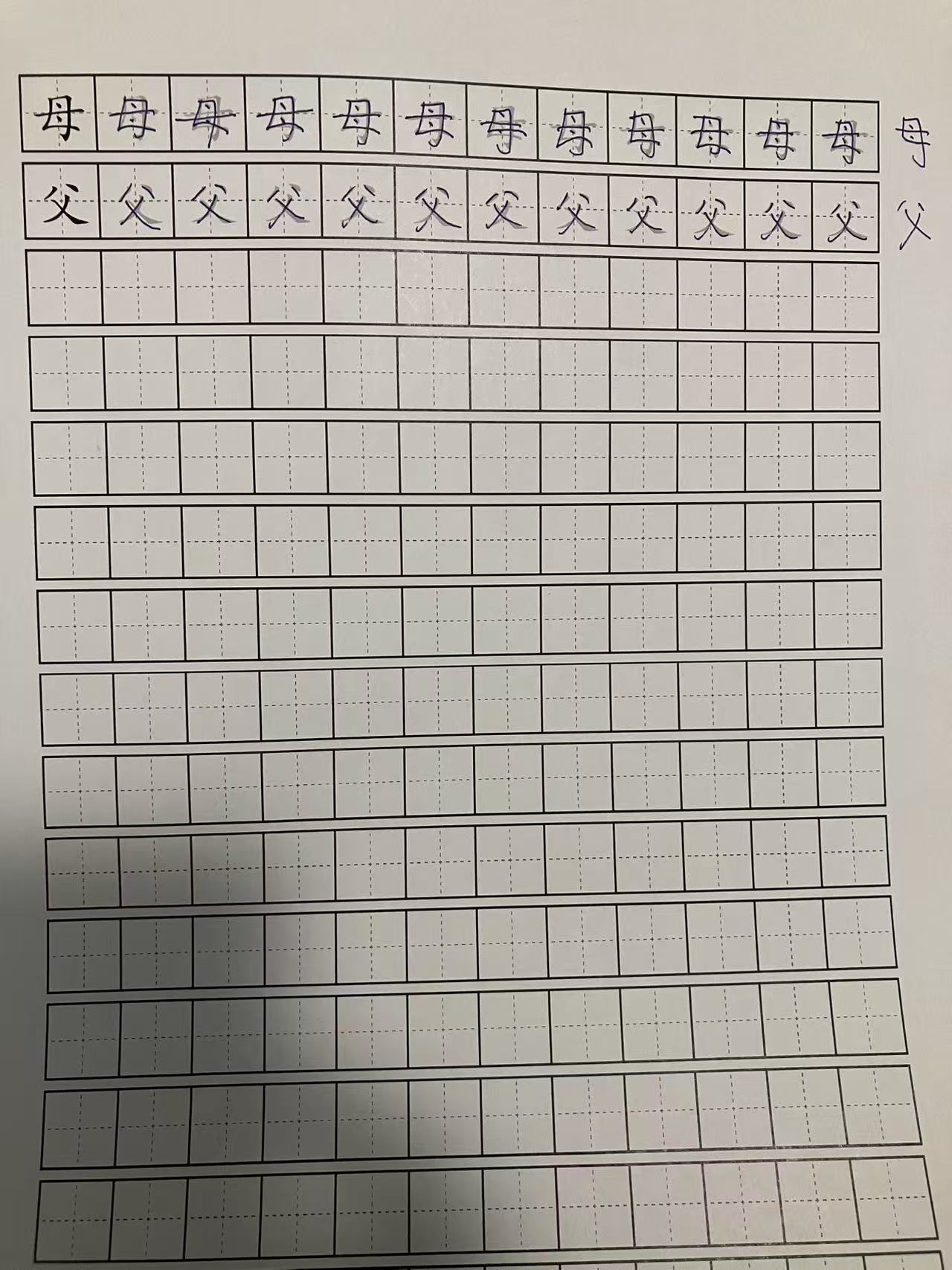
Shows improvement in stroke sequence and neatness.
L3-E4 Kanji Student Work 3#
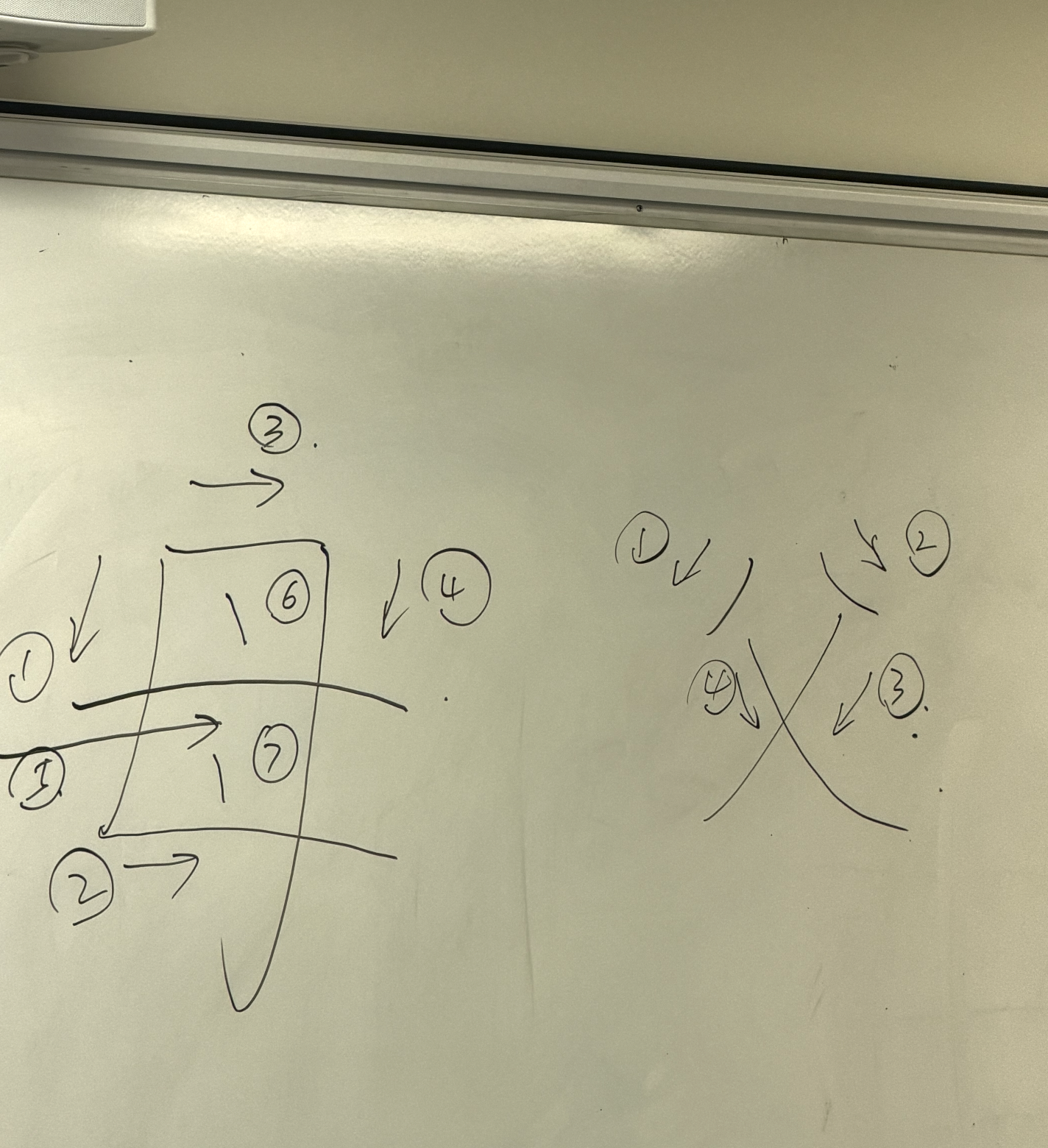
This image captures the teacher’s explicit modelling of kanji stroke order and character composition.
It served as a scaffold to support students’ deep understanding of the structural logic of the kanji 母 and 父, enabling them to compare component shapes and imitate accurate stroke sequence.
This teacher demonstration provided high cognitive support and established clear quality criteria before students attempted their own writing.
L3-E5 Peer Feedback Sample 1#
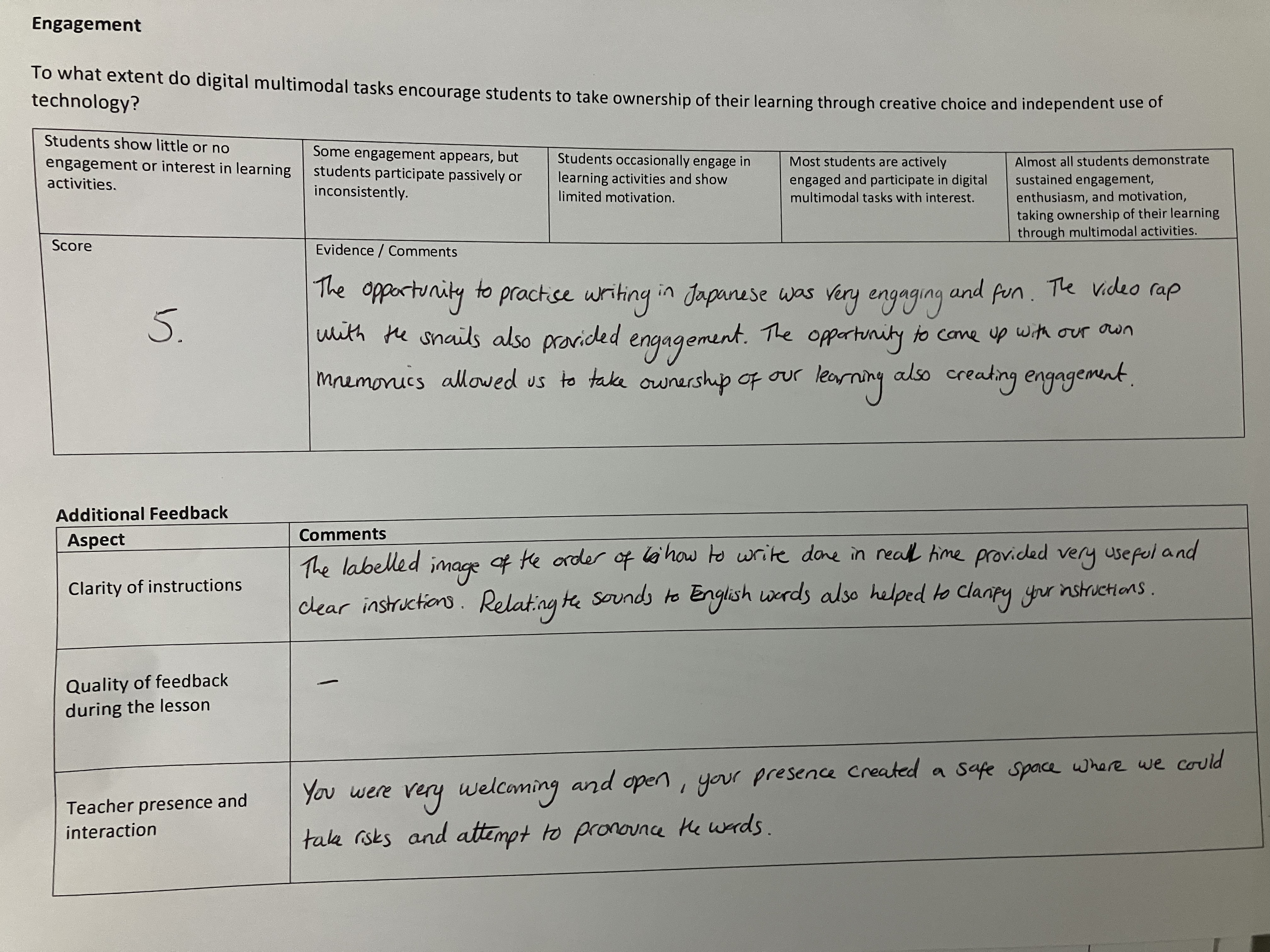
Provided feedback on sequencing and modelling quality.
L3-E6 Peer Feedback Sample 2#
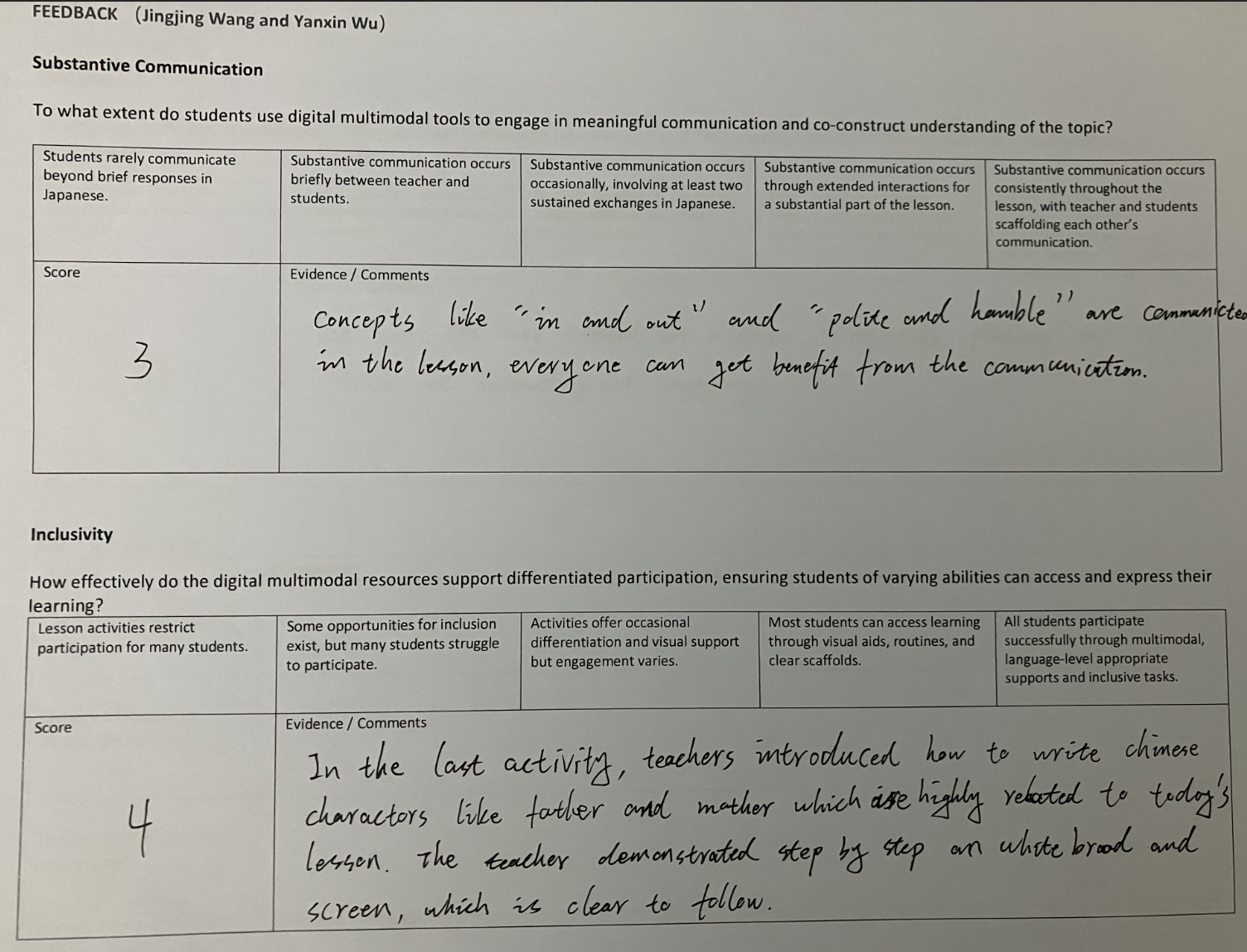
Focused on clarity of instruction and scaffolding.
L3-E7 Peer Feedback Sample 3#
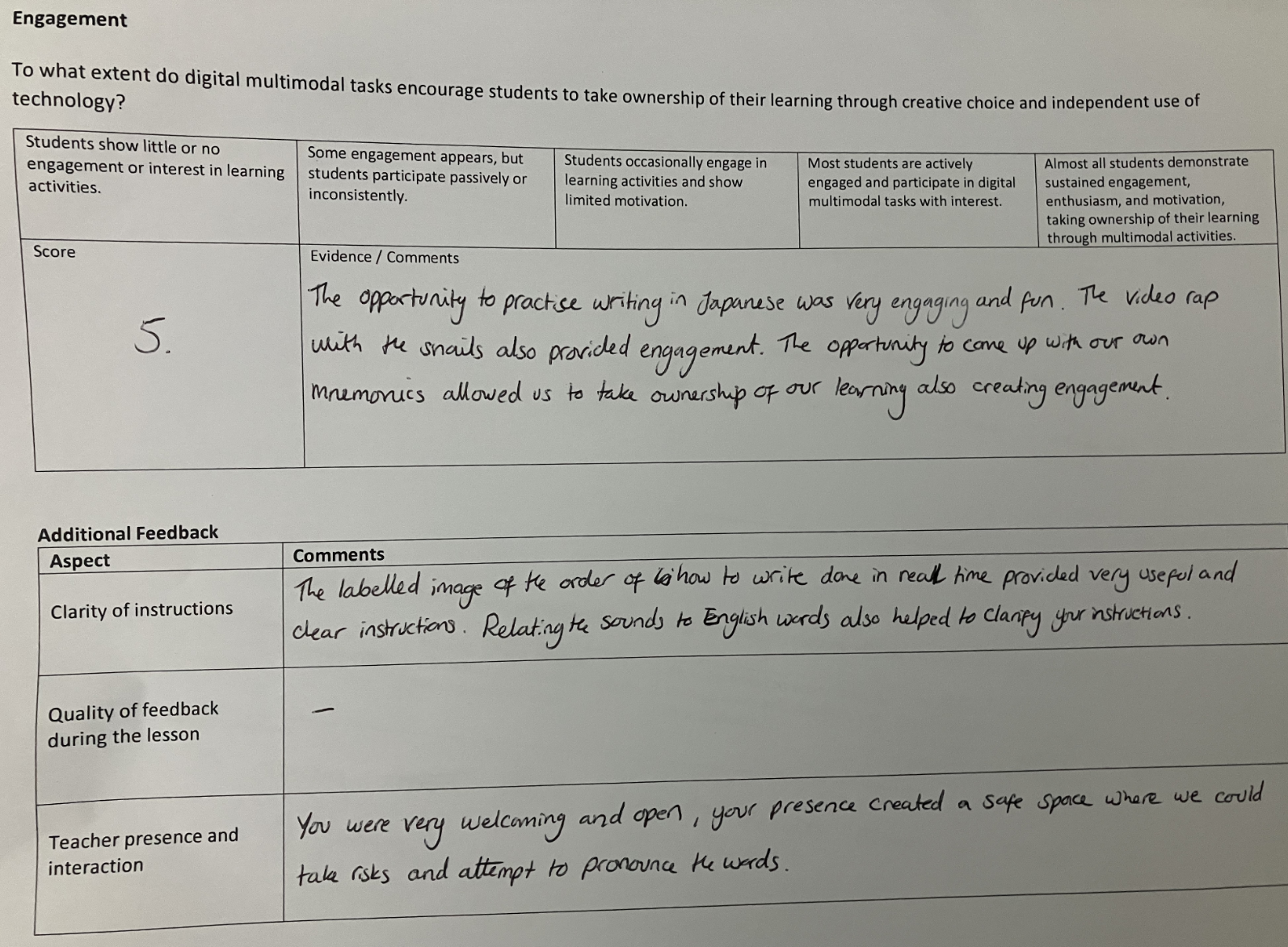
Evaluated the intellectual demand of a peer’s lesson.
🟧 Lesson 4 Evidence#
L4-V1 Family Interview Activity (Video)#
> Introduced the Japanese 抽選器 (chūsenki) for random grouping before conducting family interviews.L4-E1 Interview Sheet Sample 1#
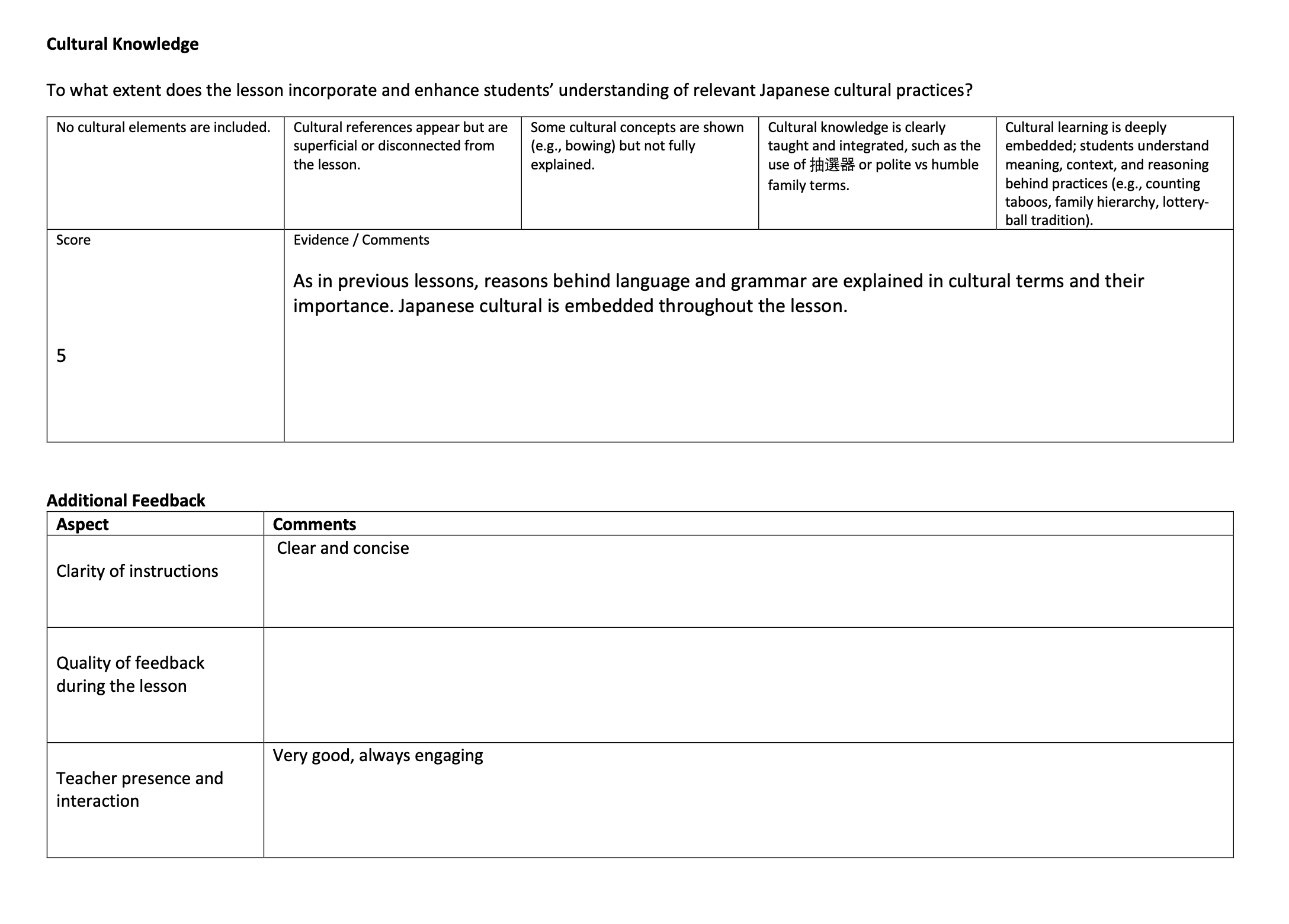
Student responses showing application of family vocabulary.
L4-E1 (2) Interview Sheet Sample 2#
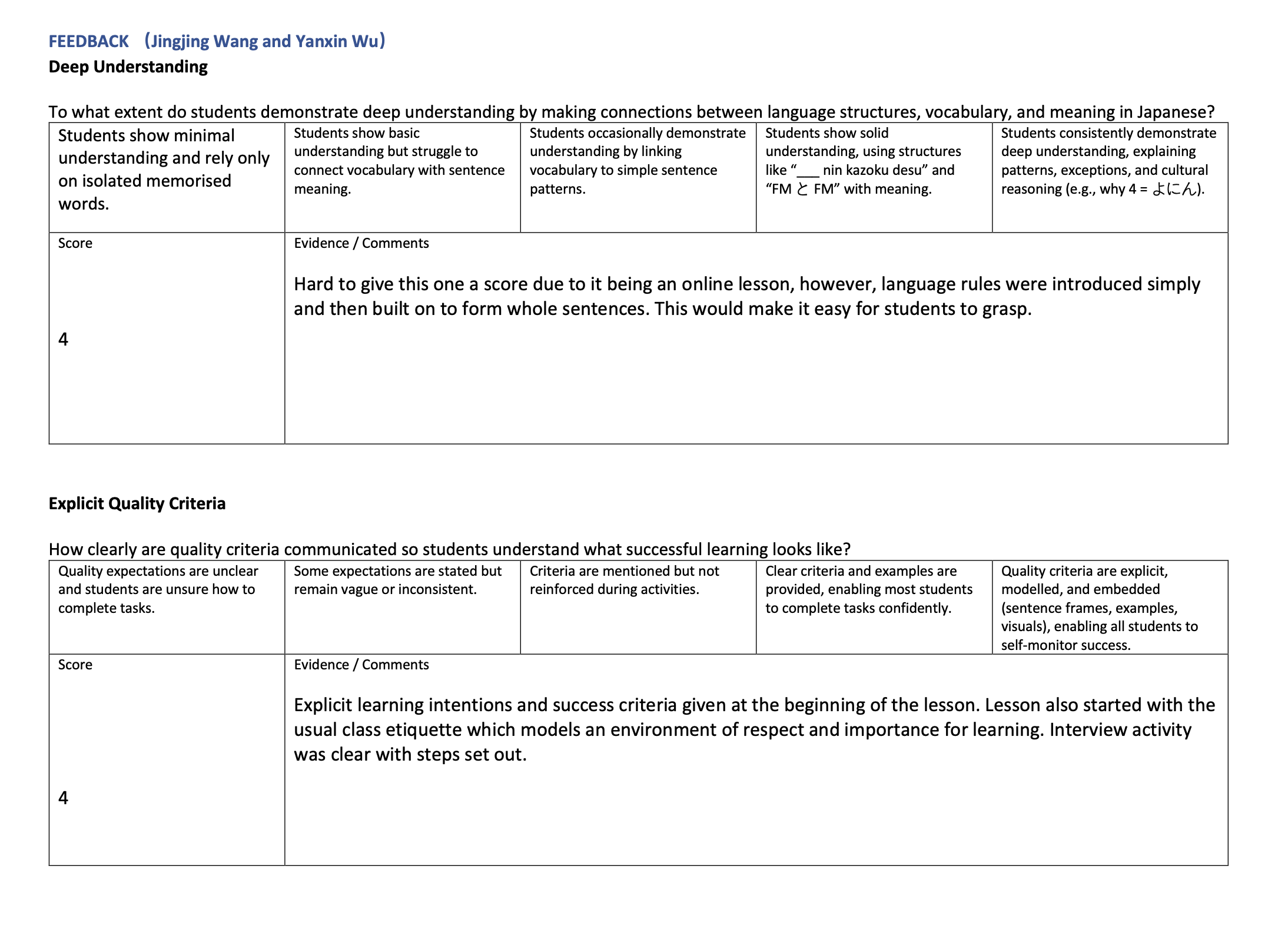
Demonstrates additional student reasoning.
L4-E2 Peer Feedback Sample 1#
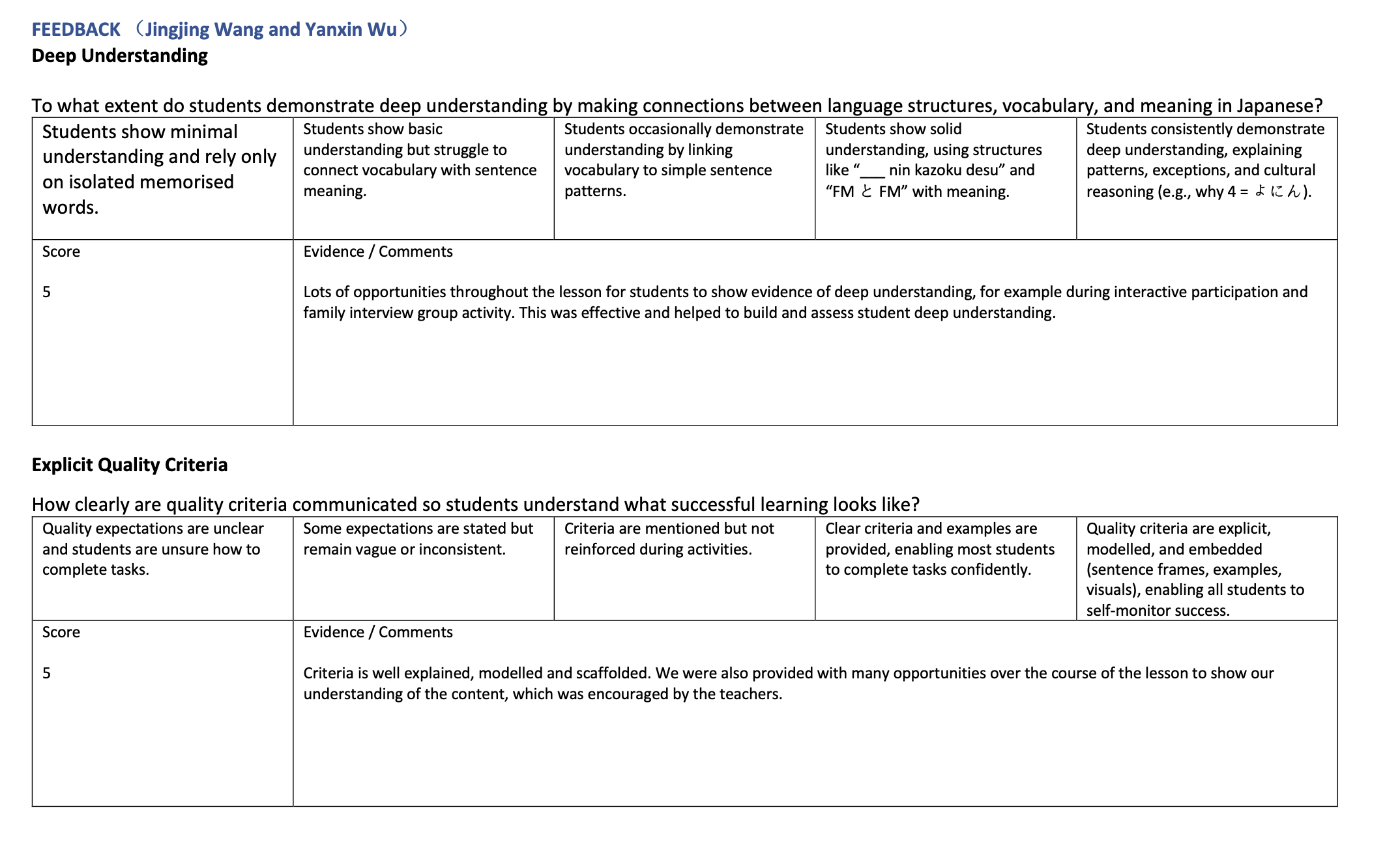
Feedback centred on intercultural integration.
L4-E2 (2) Peer Feedback Sample 2#
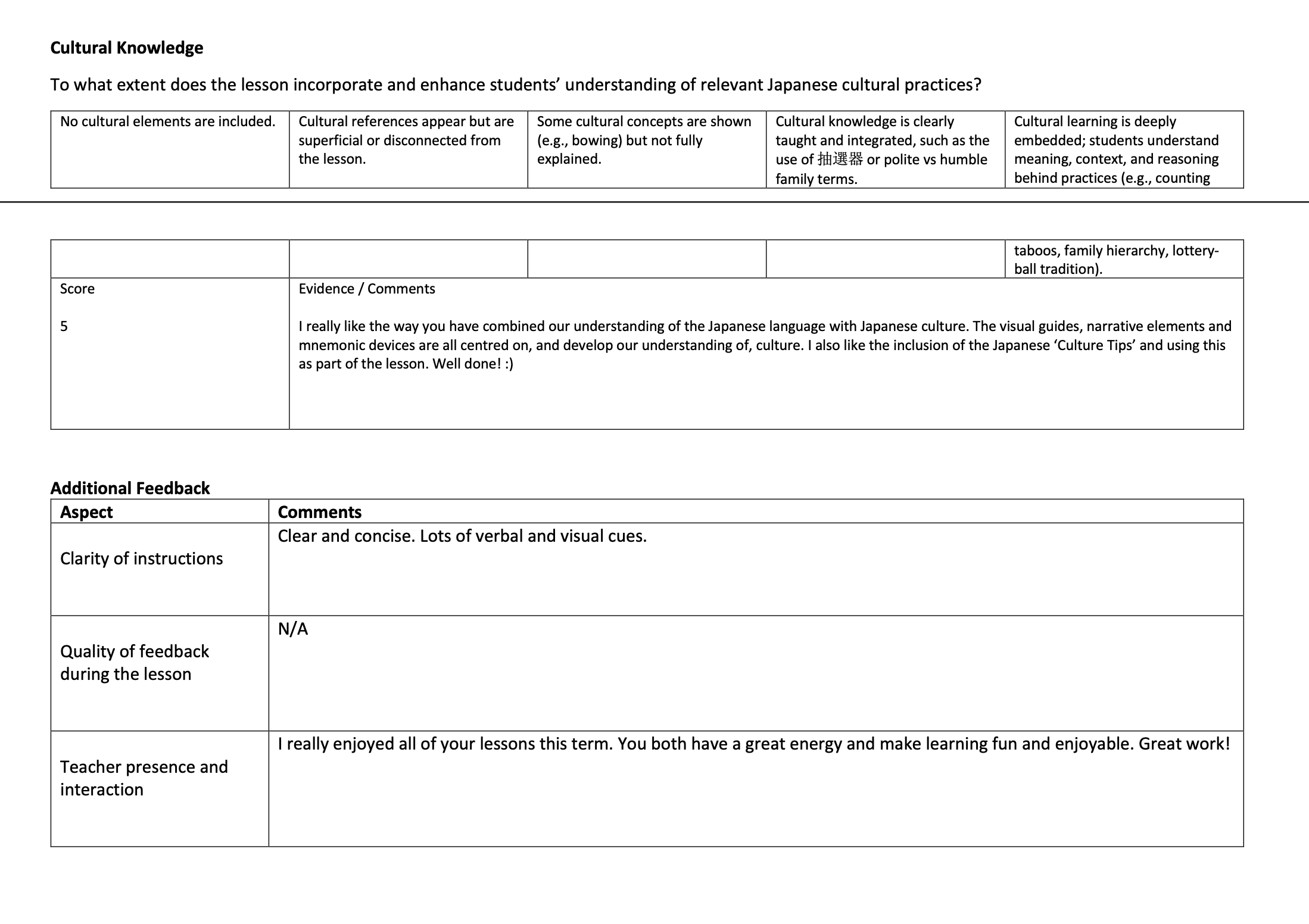
Additional comments on engagement and flow.
L4-E3 Peer Feedback Sample 1#
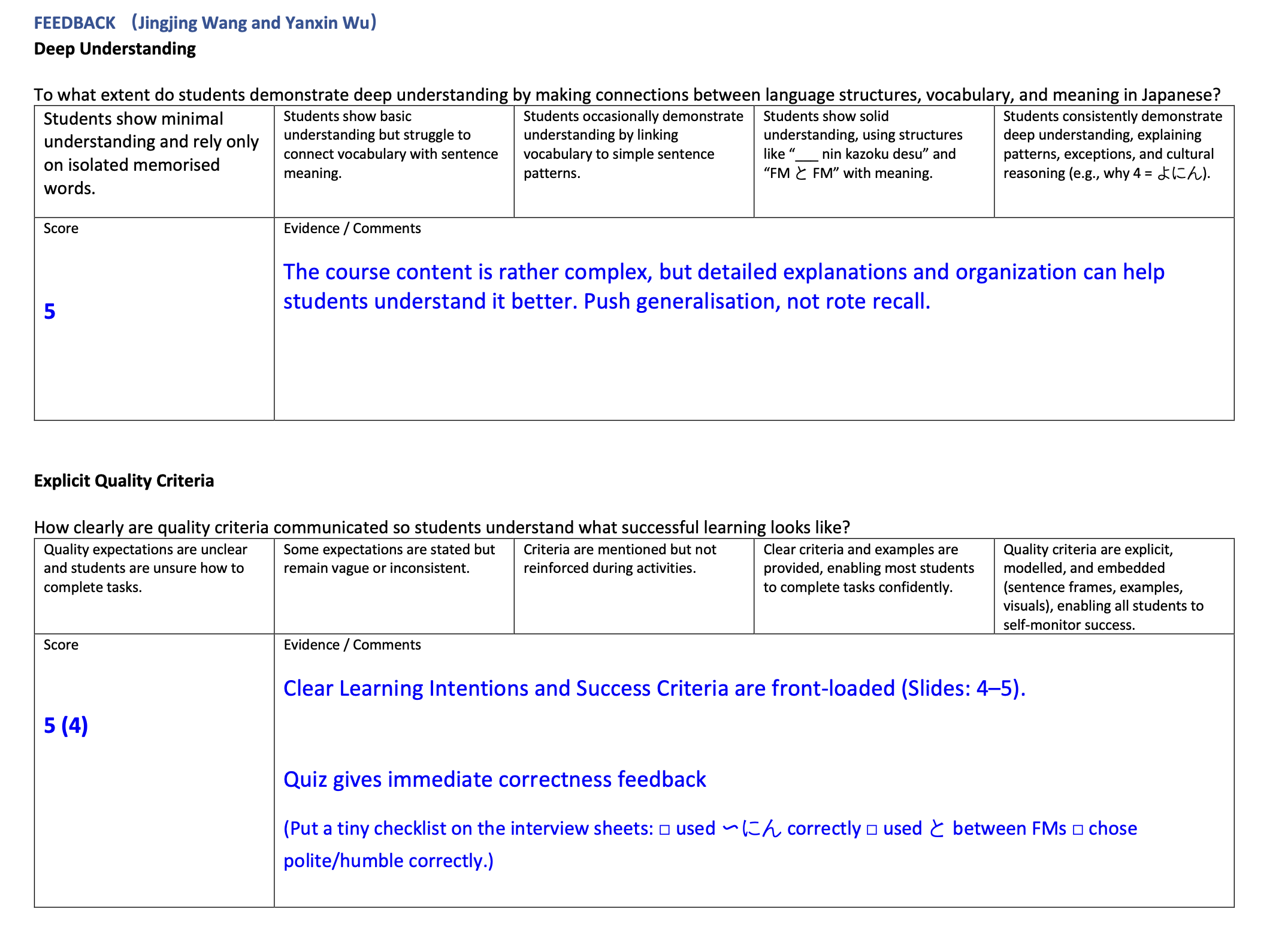
Focused on student interaction quality.
L4-E3 (2) Peer Feedback Sample 2#
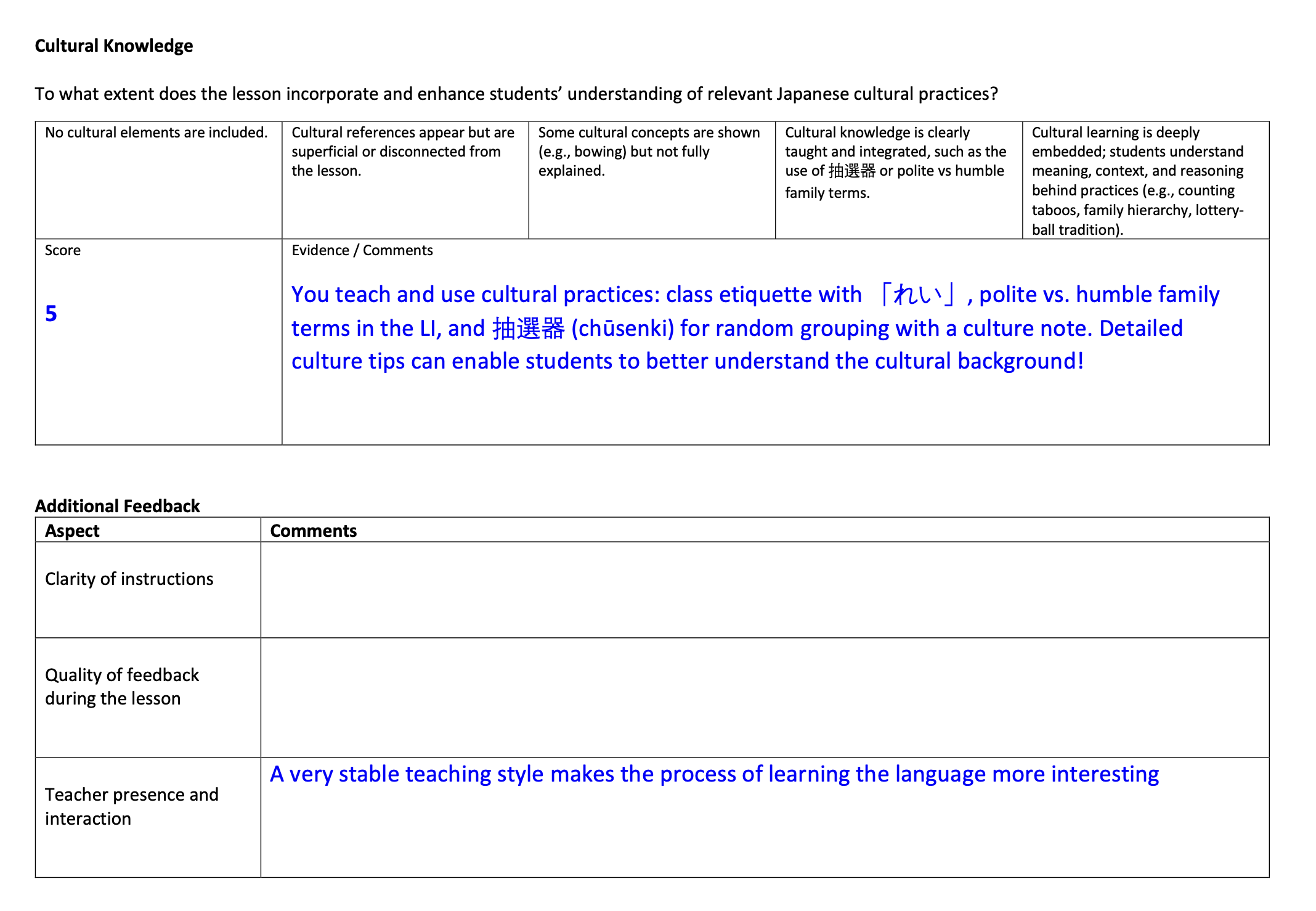
Highlighted clarity and structure of instructions.